Showing posts with label Kay Kendall. Show all posts

Feb 16, 2022

Film Biography Paperback Round-up: Michael Curtiz, Anna Held, Kay Kendall, and William Wellman

I spent a lot of my reading time over the past year catching up on paperback editions of biographies I had missed when they came out in hardback. All of these biographies came from my favorite publisher, University Press of Kentucky. I love the titles they put out dearly, but it is impossible to keep up with all the good things they publish, so I was grateful for a second chance to review these books:
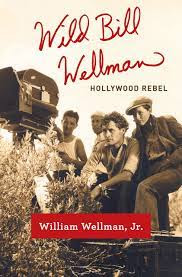
Wild Bill Wellman: Hollywood Rebel 
William Wellman, Jr. 

The best thing about this loving, but clear-eyed biography of director Wellman, by his namesake and one of his seven children, is that it is exciting from the first page. The nickname Wild Bill was apt. From his eventful childhood and peril-filled World War I pilot days to his long, magnificent career as one of the most successful film directors of the studio age, the filmmaker never had a dull moment in his life and despite caring little what people thought of him, he made more friends than enemies. He helmed an astonishing number of classic films, including Wings (1927), The Public Enemy (1931), A Star is Born (1937), and the Ox-Bow Incident (1942). Wellman also gave a break to a wide array of talent, with Ida Lupino, Rosalind Russell, Robert Mitchum, Timothy Carey, and Clint Eastwood among the young, hungry actors in which he saw star power. He appreciated his actors and crew and always stood up for him. While he had a bad habit of using his fists to deal with conflict and frustration, he’d often use that fury in their defense. His is an epic story, told here with a personal touch and the added insight of those who knew him.
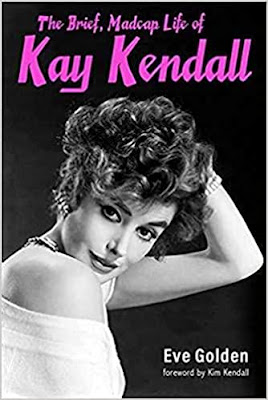
The Brief, Madcap Life of Kay Kendall 
Eve Golden 

Kay Kendall is probably best known to American audiences for her breathlessly chaotic performance in The Reluctant Debutante (1958) and a scene-stealing turn in Les Girls (1957). She would not live long after making those films, succumbing to leukemia in 1959. Her thirty-two years of life were astonishingly robust and packed with activity as if she knew her time was limited. Eve Golden taps into the endless energy and determination of this woman who needed very little time to make a lasting impression. It’s a bit like reading the script of a screwball comedy, with the notable exception of a tragic death scene. Still, the overall tone here is cheerful, reflecting a woman who would never dream of sitting still or indulging in self-pity. A great tribute to a uniquely charismatic talent.

Anna Held and the Birth of Ziegfeld’s Broadway 
Eve Golden 

The story of Polish-stage sensation Anna Held is remarkable because it both reveals a dramatically different time and the way fame has remained in many ways the same over the years. Golden’s exploration of the way rumor and promotional gimmicks both helped and hindered Held brings to mind many a scandal from the age of the Internet. Many film fans know Held from Luise Rainer’s Oscar-winning performance in The Great Ziegfeld (1936). As mesmerizing as Rainer was, Held was a much more substantial person, who balanced her knack for drawing adoring crowds with professional savvy, emotional wisdom, and a generosity of spirit, which she showed especially in the World War I years as she bravely traveled to frontlines to perform for French soldiers. She kept an eye on trends and did her best to advance with the times, as much as her core act was of a particular era. That intelligence is very much behind the success her common-law husband Florenz Ziegfeld had as an innovative stage pioneer. Golden gives the actress her proper due as a chief influencer in the way Ziegfeld dramatically changed stage entertainment.
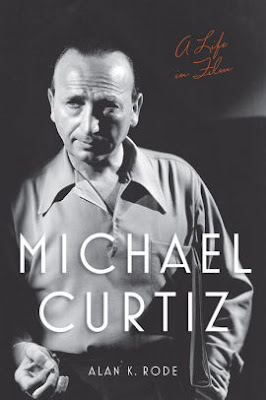
Michael Curtiz 
Alan K. Rode 

It seems that plenty of people respected Michael Curtiz’ technical skill as a filmmaker, but no one liked him. At best the insensitive and crude director had the respect of his co-workers. These personality defects are only part of the fascinating aspects of a life story that covers a phenomenal career spanning silent films in Europe to the early years of sixties Hollywood. Curtiz is most celebrated for Casablanca (1942), and for good reason, but I most enjoy the movies he made in the pre-code era and the tales of their production are just as lively as the end result. 


Many thanks to University Press of Kentucky for providing copies of the books for review.

Jul 22, 2020

On Blu-ray: Kay Kendall and Sandra Dee in The Reluctant Debutante (1958)


The Reluctant Debutante (1958) is one of those rare raved-about films that I couldn’t access for years, but found it lived up to my expectations when I could finally watch it. Based on a play by British writer William Davis-Home (also co-scriptwriter here with Julius Epstein) and directed by Vincent Minnelli, it hurtles through predictable plot points in a delightfully unusual and offbeat way. This has much to do with its lively cast, led by the bizarre and hilarious Kay Kendall in a rare starring role. I was delighted when this film that I once struggled to find on VHS was recently released on Blu-ray from Warner Archive.

Set during the debutante season, The Reluctant Debutante stars real life husband and wife Rex Harrison and Kendall as the also married Jimmy and Sheila Broadbent. Sheila is Jimmy’s second wife; he was once married to an American. The product of that first union, seventeen-year-old Jane (Sandra Dee) travels from the US to London to have a long visit with her father and the stepmother she has never met.

While Jane and Sheila get on well, their values are vastly different. The second Mrs. Broadbent wants very much for her stepdaughter to be a sensation during the season. Jane couldn’t care less about status and husband searching on the circuit, instead looking for fascinating subjects to photograph and much more interesting boys than the snooty bores circulating the balls.

Angela Lansbury complicates matters as Sheila’s nosy, but not unfriendly rival Mabel, who is also invested in propping up a young debutante: her daughter Clarissa (Diane Clare). A ridiculously boyish John Saxon adds more chaos as the polite, but worldly drum player with a reputation that Jane prefers to the upper crust swells.

Director Minnelli made little attempt to expand the action beyond the proscenium. With a cast like that he didn’t need to move far beyond four walls. Kendall had a way of expanding everything: herself, her surroundings, and the situation at hand. In a way you want her in a confined space so that you can appreciate every detail of her performance, because she works both big and small and it is a lot to take in. Harrison is a perfect foil for Kendall, essentially letting her have the fire, stepping out of the way, and taking his demotion to supporting spouse good-naturedly.

Tragically, Kendall was dying of cancer at the time of filming, a fact Harrison kept hidden from the actress, who thought she was suffering from an iron deficiency. She would die at age 33 in 1959. While she made several films throughout the 40s and 50s, she rarely found a role as juicy and well-suited to her talents as this one (Les Girls [1957] gave her another rare chance to shine).

With her sharp-edged beauty and screwball temperament, Kendall would have been a movie queen in the 1930s. Both onscreen and off she had the same merry, pedal-to-the-floor approach to living as Carole Lombard. Apparently she was also as joyfully foul-mouthed as her comedic soul sister.

As Jane, Sandra Dee is a precocious oasis of calm in the midst of Kendall’s whirlwind. Most young actresses would have faded away into dull straight-womanhood in this role. Dee can’t help but be compelling though. Even here at the age of fourteen she has a thoughtful gravity and a rare habit of listening carefully and learning quickly about the motives of those around her.

Saxon is equally calm, but magnetic. Having watched him play grizzled police detectives innumerable times over the years, it was amusing to see him in his dewy youth. These were the years where Hollywood seemed to think the Brooklyn-born actor should play Mexicans. He’s a good match for Dee, despite the slightly unsettling fact that this man is courting a girl who appears much younger than she is supposed to be.

With so many fascinating performers and the irresistible appeal of Kendall, this is a comedy romance that deserves more attention.


Many thanks to Warner Archive for providing a copy of the film for review. To order, visit The Warner Archive Collection.

Jun 6, 2018

On Blu-ray: Les Girls (1957)


Les Girls (1957) was Gene Kelly’s last contracted MGM musical. It’s a curious film, modern in some respects, old-fashioned in others. In this Rashomon-like story of a successful dancer, and his various entanglements with the trio of women who form his troop, elation and tedium rest side-by-side. I recently had the opportunity to watch this intriguing film on a new Blu-ray from Warner Archive.

The film begins in a courtroom. Retired dancer Lady Sybil Wren (Kay Kendall) is being sued by her former troop mate Angèle Ducros (Taina Elg) for claiming in her memoir that she once attempted suicide because of her lover Barry Nichols (Kelly). Most of the rest of the film is in flashback, as the two women, and the third dancer in their group Joy Henderson (Mitzi Gaynor) share their widely differing perspectives on the situation. This drama is juxtaposed with a series of saucy song and dance numbers, written by Cole Porter (this would be his final film score).

Les Girls starts out with a boisterous feeling: colorful, alive, and showing great promise. However, as the songs gradually take a backseat to the drama, it becomes less engaging. No one wants to see a long scene with Kay Kendall and Gene Kelly discussing their relationship difficulties. It’s better when she gets drunk and wheels around her apartment singing at the top of her lungs, or really does anything that showcases her ability to show complete faith in absurd behavior.

The five Porter numbers are the highlight of the film, combining a modern sensuality with more dated elements like the back-up dancers in brown face. Kelly could get pretentious in his ambition to be arty; a number in which he tangles with a metallic rope is more silly than avant garde. There are some intriguing numbers though, the best of them partnering Gaynor wit Kelly, a wise choice, because she is more suited to the choreography than ballet-trained Elg and non-dancer Kendall.

Elg and Gaynor are engaging in their roles, but as she often did, Kendall steals the film. I doubt the humanity of anyone who is able to resist the charms of this astoundingly charismatic woman. Everything about her sparkles. That she would die of cancer only two years later is one of the great losses of cinema.

The disc image is sharp and clean, as is the sound. Special features include the interesting short Cole Porter: Ca C’est L’Amour, hosted by Taina Elg, which is actually more of a general overview the production. There’s also a theatrical trailer and the vintage cartoon Flea Circus.

Many thanks to Warner Archive for providing a copy of the film for review. To order, visit The Warner Archive Collection.