Showing posts with label Movie Review. Show all posts

Jul 24, 2024

On DVD/Blu-ray: A Stunning Noir Classic from Argentina, Never Open That Door/No Abras Nunca Esa Puerta (1952)


As a movie fan, one of the greatest revelations I’ve enjoyed in the past few years has been the excellent collection of classic Argentinean film noir released on DVD/Blu-ray by Flicker Alley. The Cornell Woolrich adaptation Never Open That Door/No Abras Nunca Esa Puerta (1952) now joins The Beast Must Die (1952), Bitter Stems (1956), and El Vampiro Negro (1953) in a group of films which demonstrates that Argentinean noir was just as good, if not better than Hollywood at exploring the darkness in the human soul. 

Director Carlos Hugo Christensen had originally intended to adapt three stories by crime writer Cornell Woolrich (Phantom Lady, Rear Window, and many more). However, that would have brought the film to over two hours, which was unheard of in Argentina, so two of the stories appear in this film and the third was expanded and released as If I Should Die Before I Wake (Si muero antes de despertar)(1952). This film is included as a special feature in the Flicker Alley set. 

The first half of the film is based on the story Somebody's on the Phone. Set in a world of elegant luxury, it features a brother and sister who live together, but who are a mystery to each other. When the sister finds herself in trouble with a blackmailer, her brother goes to extremes to find justice for her. The chilly, impeccable surroundings of their home make the reason for his sister’s distress more mysterious, because there is little around them to reveal who they are and what drives them. You are left to wonder about the trouble; is it excessive debt, embarrassing photographs, or something more sinister? This serves a purpose similar to Alfred Hitchcock’s MacGuffin, because the real story is the lengths this brother will go to for his sister. 

An adaptation of The Hummingbird Comes Home closes the film. In it an elderly blind woman discovers that her long-absent son has come home with his accomplices after committing a string of crimes. She realizes by the tune he whistles that he is the dangerous criminal described in a radio news report. While she loves her son, she knows she must not let him cause more harm. In a story confined mostly to her home, she is clever and resourceful as she devises a plan to stop him, while hopeful that he will choose a better path going forward. Cinematographer Pablo Tabernero does remarkable work in both sections of the film, but here he is especially effective in using light and shadow to reveal the mix of vulnerability and strength this elderly woman possesses. 

If I Should Die Before I Wake fits well into the trio, but is also extremely tense and effective as a stand-alone production. A boy is sworn to secrecy by a fellow classmate to not tell of the mysterious man who gives her gifts. When the man murders her, he is desperate to tell the truth, but feels bound to his secret, which his mother, not knowing the details of the matter tells him he must continue to keep. When the man sets his sights on another classmate, he realizes the danger of the adults in his life teaching him that the world must be approached as black and white, when it can be extremely dangerous to ignore that it is often in shades of gray. 

The intended meaning of Never Open That Door is a warning to not cross from good to evil, with the implication being that it is never worth the risk. I thought novelist Halley Sutton revealed an even more compelling theme in her interview for a Cornell Woolrich documentary included in the special features: all three of these stories are about familial devotion. Whether it is a brother protecting his sister, a mother her son, or a son following his mother’s instructions to the letter, the tension comes from characters placing family above all else. While that devotion and sense of wanting to protect or avenge loved ones is common in film noir, it isn’t often mentioned as a common element of noir, and I thought it was an interesting point. 

Along with If I Should Die Before I Wake, special features include a booklet with photos from the film, an introduction by Eddie Muller, audio commentary by author and film historian Guido Segal, a new documentary about source novelist Cornell Woolrich, and a newly recorded conversation with film archivist and historian Fernando Martin Peña. 

More Argentinean noir from Flicker Alley: 


El Vampiro Negro (1953)


Many thanks to Flicker Alley for providing a copy of the film for review.

Nov 10, 2023

On 4K Ultra HD: Jean-Luc Godard's Le Mépris/Contempt (1963)


 Le Mépris/ Contempt (1963) operates in sun-soaked, colorful betrayal. Jean-Luc Godard’s rebuke to the film industry, wrapped in a tale of a crumbling marriage is set in a warm climate, but cold to its core. In a new 4K Ultra HD from Lionsgate, that juxtaposition between beauty and despair has never been more vibrant. 

Godard always presents something for the eyes to feast upon in this story of a playwright (Michel Piccoli) who is contemplating writing a script for a crass American film producer. In a moment, his young wife (Brigitte Bardot) begins to question his fidelity to her and in his failure to recognize that, begins to lose her. The beautiful, but wistful score by Georges Delerue, one of the most magnificent in cinema, perfectly sets the tone of beauty coupled with tragedy. The striking imagery of the setting in Capri, and Bardot’s beauty are juxtaposed with an atmosphere of loss and spiritual decay. 

It’s ironic that the producer’s insistence that Godard display a nude Bardot to increase interest in the film would ultimately benefit the film. He makes her nude scenes almost comically blunt and exploitive, essentially proving his point further. Bardot wasn’t the first choice for the role and was cast in the hopes her sex appeal would sell the film, but she’s perfect for the role, because she herself was used and underestimated much like her character Camille. 

It’s impossible to miss the symbolism of Fritz Lang appearing as the production’s director, a quietly frustrated man who suffers the indignity of his situation having escaped much worse from the Nazis in World War II (the tale of his film counterpart fleeing Germany after an offer of work from Joseph Goebbels was true). He is accepting of his situation and too much in love with making movies, any kind of movie, to leave a job undone. 

As the tasteless producer, Jack Palance relishes the absurdity of his role, leering at footage of a naked actress frolicking in the water and mumbling to himself with delight that he “loves gods” in the same way one might show approval for a favorite band. 

Le Mépris is precisely the sort of film that justifies the existence of the 4K Ultra HD format. Its luxurious look is rendered with a respectful touch: bold colors, and clean sound and images, but not so sharp a resolution that it loses the warmth of film. I had a feeling of rediscovery watching Le Mépris in this format. 

The disc includes an introduction by film historian, producer, and professor Colin MacCabe.


Many thanks to Lionsgate for providing a copy of the film for review.


May 12, 2023

Documentary Picks at SIFF--Desperate Souls, Dark City and the Legend of Midnight Cowboy and Douglas Sirk: Hope as in Despair


While there are several documentaries that will be of interest to classic film fans at Seattle International Film Festival 2023, Desperate Souls, Dark City and the Legend of Midnight Cowboy and Douglas Sirk: Hope as in Despair were of particular interest to me. In different ways both films explore the powerful external elements that shape cinema and how they are so often rooted in challenging emotions. The film titles link to the festival screening information for each documentary. 

Having read and reviewed the source material, Shooting Midnight Cowboy by Glenn Frankel, there was a hint of familiarity to Nancy Buirski’s documentary about the production of the film Desperate Souls, Dark City and the Legend of Midnight Cowboy. Like the book, it acknowledges the deep debt Midnight Cowboy owed to its source material, the book by James Leo Herlihy and it likewise gives the actors and other participants in the production the space to speak candidly on the personal and societal impact of making the film and the turbulent times it reflected. 

Buirski explores those times thoroughly, with extensive footage of the rapidly changing, violent, and rebellious world in which Midnight Cowboy was made. Coupled with deeply emotional and insightful commentary from players including Bob Balaban, Jon Voight, and Jennifer Salt, you come away with a better understanding of both the film and the era. For that reason, the documentary has general appeal beyond classic movie fandom. 

One element that Buirski gives more attention is the feeling that this was a film about misfits made by a band of misfits. That fact was made more remarkable when Midnight Cowboy became the first X-rated film to win Best Picture at the Academy Awards. The very establishment (though in her own way rebellious) Elizabeth Taylor looks a bit surprised, if not unpleased to see the film’s win as she announces it, reinforcing the juxtaposition of a rebellious production with an industry struggling to maintain relevance in a rapidly shifting landscape.
German director Roman Hüben’s Douglas Sirk: Hope as in Despair is a more spare, elegant production which hones in on a tragedy that ultimately shaped the tone of the also German filmmaker’s Hollywood melodramas (among them Imitation of Life, Magnificent Obsession and All That Heaven Allows). Hüben bases his film on the discoveries he made at the Douglas Sirk Archives housed in the Cinémathèque Suisse. There he found the revealing calendar/diaries his second wife Hilde Bary kept on his behalf. 

In his research Hüben learns that Sirk’s first wife Lydia Brinken apparently became a Nazi out of spite because it angered her that her ex-husband had married a Jewish woman. She also used current German laws to forbid him from seeing his son, who also became a Nazi. The boy became an actor at an early age, so the devastated Sirk was only able to see him on the screen. 

The film explores how this heartbreaking turn of events molded Sirk’s style, which showed direct references to what had happened and hit emotional notes that seemed clearly influenced by his loss. Jon Halliday, the author of Sirk on Sirk offers the most revealing insights into how that affected the filmmaker, though he told him very little of what happened. Also welcome is the insight of the two directors who most effectively translated the Sirk style: Todd Haynes in a new interview and Rainer Maria Fassbinder in archival footage; both men understood that while the filmmaker used a distinctive visual style, his true essence was in the way he explored emotional content. 

While Hope as in Despair reveals an artist managing a life-altering loss, Hüben also explores Sirk's joy in work, and accurately describes his output as “films made by someone who loves people.” With a combination of film clips and interviews, a story of perseverance in the face of trauma emerges. It is ultimately a story with a strong upside, centering a man with a great sense of humor who led a productive life to the very end. 


The 49th Seattle International Film Festival is in theaters from May 11-21 and streaming May 22-28.

Jan 4, 2023

On Blu-ray: Attack of the 50 Ft. Woman (1958)


Attack of the 50 Ft. Woman (1958) is probably most famous for its poster featuring the titular giantess stepping over a busy freeway with a car in her hand, a bit of creative marketing which doesn’t reflect the plot of the movie in any way. 

While the movie isn’t nearly as sensational as its marketing, it’s nevertheless a fun 66 minutes of sci-fi chaos. I recently revisited the film on a new Blu-ray release from Warner Archive. 

It takes most of the running time of this flick to get to the giant action. In the first part of the movie Hayes is the draw, with an over-the-top, but sympathetic performance. She plays a wealthy woman with an unfaithful husband, played with oily sleaziness by William Hudson. 

With a gigantic diamond around her neck that looks like a decoration from a chandelier and tears streaming down her cheeks, Hayes pounds the wall in frustration. She’s hooked on a toxic guy, and she knows she can’t leave him. The only one who cares for and understands her is her butler, but he is powerless to overcome her self-destructive ways. 

Hudson is openly cheating on Hayes with a bubbly blonde played with effortless immoral flair by Yvette Vickers. When Hayes meets an extraterrestrial giant in the desert one night, the alien encounter eventually supersizes her as well. It’s only a matter of time before her hubby discovers the consequences of his actions. 

Understandably, the best part of the movie is when Hayes assumes giant form and begins to take revenge on the world. Up until that moment though, the film moves at a good pace, with brisk action and lively character actors, like George Douglas in a tremendously goofy performance as the town’s sheriff. 

It was strange seeing this movie with such a clear picture after years of less pristine VHS and television viewings. I honestly liked the grittiness before, but seeing everything with such clarity was also a revelation. 

Special features on the disc include a trailer and a commentary by film historian Tom Weaver and Yvette Vickers which was one of, if not the last projects she did before she died in 2010. She does a great job reminiscing; Vickers loved the pace of making ‘B’ pictures and had a lot of happy memories to share about the production of the film. 


Many thanks to Warner Archive for providing a copy of the film for review.

Dec 20, 2022

On Blu-ray: A Stunning Cast in John Huston's The Night of the Iguana (1964)


I don’t know how many times I’ve watched Night of the Iguana (1964) and I’ve always gone into each viewing thinking of it as an Ava Gardner film. Which isn’t entirely off-base. It’s one of her best; she gets the chance to truly act, still gorgeous, but far from the glossy movie queen image that brought her fame. 

This is much more than a Gardner flick though. It’s full of incredible performances, brought to their heights with the support of director John Huston. It’s best described as a great ensemble piece. I was reminded of that when I recently revisited the film on a new Blu-ray from Warner Archive. 

Based on a stage play by Tennessee Williams, Night of the Iguana is a simple story that covers the breadth of human need and desire, as is typically case with the playwright’s works. Richard Burton is a defrocked clergyman making his living as a tour guide. He trundles up to a cheap Mexican hotel, with a bus full of confused school teachers and one 16-year-old (Sue Lyon) who is determined to seduce him. There he reconnects with the owner of the ragged establishment and widow (Ava Gardner) of an old friend he’d hope to see. Soon they are joined by an artist (Deborah Kerr) and her ailing poet grandfather (Cyril Delevanti), who have no money, but hope their skills will pay their bills from day-to-day. 

What follows is a series of emotional collisions, between the tour guests and Burton (Grayson Hall is especially indignant as their leader), the sexually charged Lyon and Burton, Gardner and Burton, Gardner and the constantly cash-poor Kerr, and at great length, Kerr and Burton. All of these interactions vibrate with the messiness of life. The misunderstandings, missed connections, frustrations, and chaos that come with being human come to life in that particular way Williams had of bringing truth and high drama together. Everyone is at their best here; the set stories that Huston was a sympathetic and encouraging director are shown to be accurate on the screen. 

What struck me on this watch though was Burton and Kerr. They have several frank discussions which I’ve come to see as the most profound strength of the film. These two strangers who have spent their lives staying within certain boundaries open themselves up to each other and enjoy a free and deep emotional intimacy. It’s moving, sad, and in a lot of ways amusing to see them connect and, in a way, hold confession for each other. 

I’m grateful for this film and the many ways it works as entertainment and something a little deeper. It’s a great showcase for its cast and the prime example of how lucky we are that a director as complex and intelligent as Huston had the power of studio budgets and support for as many years as he did. 

Special features on the disc include a trailer for the film and the illuminating documentary shorts On the Trail of the Iguana and Night of the Iguana: Huston’s Gamble. Many thanks to Warner Archive for providing a copy of the film for review.

Nov 22, 2022

On Blu-ray: El Vampiro Negro, Long Unseen Argentenian Noir from Flicker Alley


It’s been a delight to see the steady trickle of Argentinian noir flicks coming out from Flicker Alley, thanks to the preservation efforts of UCLA Film & Television Archive and the Film Noir Foundation. Every film has been worthy of classic status and I’ve appreciated the additional insight in the DVD/Blu-ray special features for each set. Now joining the label’s The Bitter Stems (1956) and The Beast Must Die (1952) releases is the stylistically exciting El Vampiro Negro (1953). 

The film is an interpretation of M (1931), the Fritz Lang film about a child murderer that launched the career of Peter Lorre. Carryovers include the killer’s penchant for whistling Grieg and the basic plot of the tortured criminal who eludes the police, but faces street justice. Otherwise it is dramatically different as far as style and notable for the inclusion of a strong female point of view. 

Director Román Viñoly Barreto sets a surreal, nightmarish scene from the beginning, showing the tortured imaginings of professor, and killer Professor Ulber (Nathán Pinzón) as he takes a Rorschach test. Unexpectedly, that strange, dreamlike menace isn’t just a stylistic choice for the opening scene. The mood and style of these first moments carry over to a nightclub, the shadowy and unsettling world where Amalia (Olga Zubarry) sings so that she may pay for her daughter’s private school tuition. 

Barreto arranges the nightclub in tight tableaus, set in suffocating closeness. You feel the oppression of this night world; a place for escape that can also be a prison. It is adjacent to this setting that Amalia witnesses a man throwing a dead girl into a sewer. 

Traumatized, and wishing to keep her child away from scandal, Amalia attempts to stay out of the investigation, but is eventually drawn in with the same uncomfortable closeness of her professional world. This is due in part to the meddlesome concerns of inspector Dr. Bernard (Roberto Escalada), who scolds her for her profession without showing any empathy for the difficulty of her position. His attitude is in part because he is unable to have children with his wife (Gloria Castilla) who is dealing with her own limitations which are revealed gradually. While Bernard is not the killer, he is in many ways less sympathetic than Ulber, because of his selfishness and power to change his behavior. 

As the killer, Pinzón is less creepy than Lorre, and more a fearful, awkward man. The viewer is put in the position of feeling empathy for someone who has destroyed lives and thrust a community into terror. In the end, Amalia understands him better than Bernard, because the latter is not capable of understanding the Professor’s helplessness. 

It’s a fascinating film, gorgeous to look at, uncomfortable if intriguing to experience, and an even mix of straight suspense and the doom-laden feel of film noir. 

There’s a special feature in which film experts discuss the differences between the original M, the version filmed in Hollywood in 1951, and El Vampiro Negro. I agree with the consensus that each of these films are remarkable. While M stands above the other two in several ways, the Argentinian take on the story is outstanding and deeply satisfying if disturbing. 

Other special features on the disc include an introduction by Eddie Muller, audio commentary by archivist/historian Fernando Martin Pena, a booklet with photographs and an essay by Imogen Sara Smith, and a charming interview with Daniel Viñoly, son of the director. 


Many thanks to Flicker Alley for providing a copy of the film for review.

Sep 14, 2022

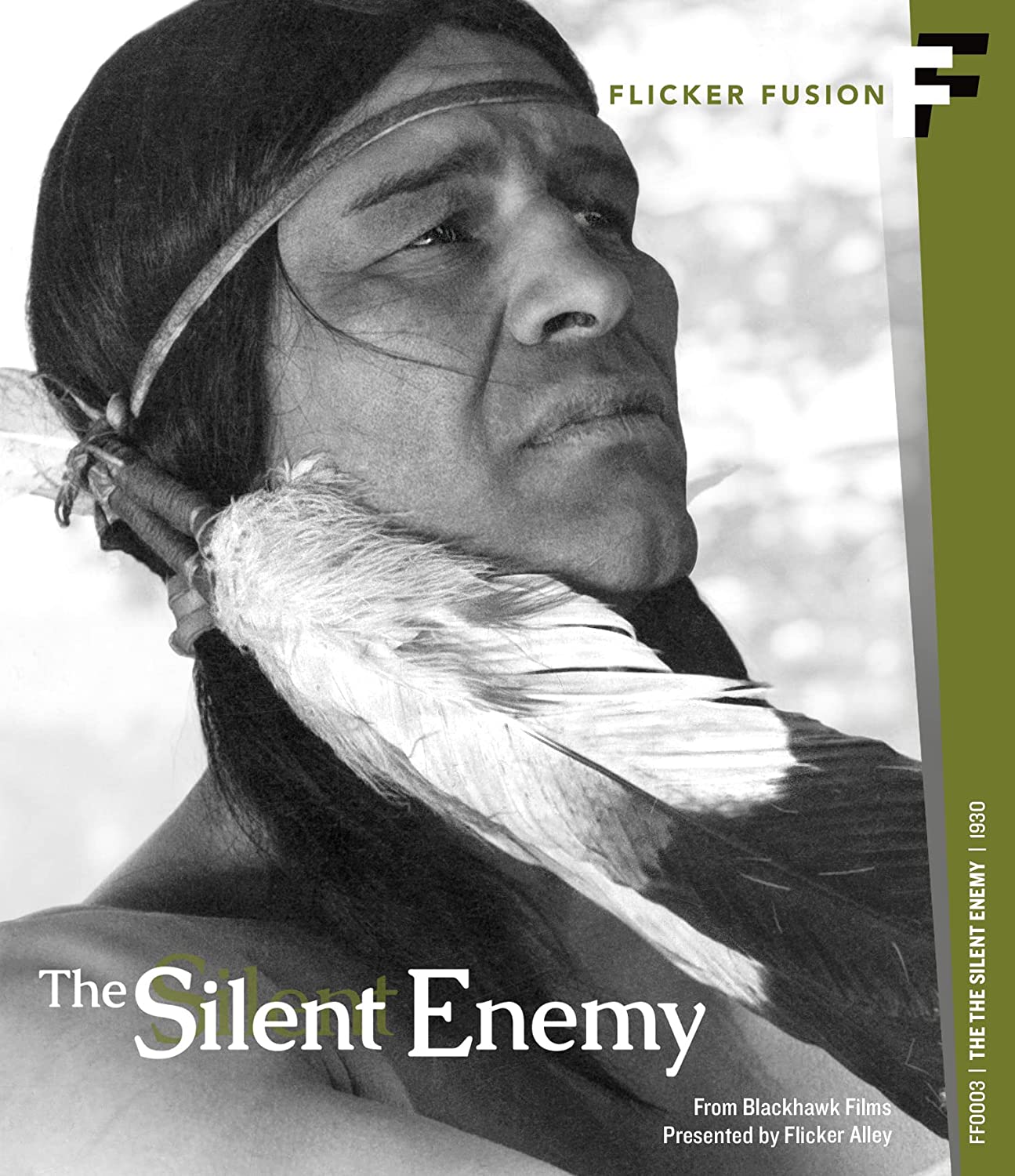
On Blu-ray: Flicker Alley Release The Silent Enemy (1930) Reveals a Long Lost Gem


The Silent Enemy (1930) is both a cultural curiosity and a deeply entertaining film. Made on location in the Canadian Northwest by director H.P. Carver, and starring a troop of naturally gifted indigenous actors, it gives a glimpse of how fascinating a truly diverse movie industry could have been throughout the years. 

I recently enjoyed the film on its debut Blu-ray release from Flicker Alley. The liner notes for the disc, excerpted from film historian Kevin Brownlow’s The War, The West and The Wilderness are essential to understanding this film that evokes the documentary feel of Nanook of the North (1922). The historian was instrumental in the revival and restoration of the film after producer W. Douglas Burden brought it to his attention, essentially saving it from obscurity. 

While Paramount had granted the contract for the film and studio personnel like Jesse Lasky felt it was well made, it was also a silent when talkies were taking over the industry and thrown into block booking packages instead of given much-needed special exhibition. Thus it never got the attention it deserved, which makes this release welcome and a bit of a miracle. 

It’s the story of the Ojibway tribe in the years before settlers arrived. For this group of hunters and gatherers, hunger is a constant threat. Various factions in the group battle for dominance as they are threatened by famine. There’s plenty of drama among these tribe members, but egos and desires ultimately take a backseat to the ever pressing need to ensure their survival. 

While the intertitles in silent films don’t usually stand out to me except for the odd entertaining line, I was impressed with the powerful and poetic prose here. Prefacing scenes with phrases about “dogs savage with hunger” and a wildcat that is “the killer of the forest, nine feet from tip to tip” gave the story an extra edge and sense of tension. 

I also loved the striking simplicity of the way the ceremonial scenes were filmed. The actors are situated in the center of the frame, which gives them an added sense of power and grounding in their most spiritual moments. The focus is on the people in the pageantry, while the edges of the frame fade into darkness. 

Having recently seen Prey (2022) I was fascinated by the commonalities between the two films. Both stories are entertaining and suspenseful in the way they feature indigenous actors demonstrating their survival skills. While they are dramatically different stories, they share a lot in spirit because of the charisma, drive and ability of their performers, not to mention their great chemistry. It made me think about the decades between the films, how many different kinds of stories could have been told of these people and how that could have dramatically altered our perspective of each other. 

For that reason The Silent Enemy can be forgiven for its magical native framing and the other ways it misses fully appreciating and understanding its subjects. Overall it succeeds, finding the humanity, interest, and excitement in telling the stories of the people who first lived in territories which challenged them, but in which they ultimately succeeded. 

There are two soundtrack accompaniments on the disc: I found both to be enjoyable, but the score was especially impactful, with a bold, timeless composed by Siegfried Friedrich feel that suited the story well. Other special features include an image gallery with pictures from promotional materials and the production and a fascinating audio interview with the film’s producer W. Douglas Burden, conducted by film historian Kevin Brownlow, in which he shares what an adventure it was making The Silent Enemy


Many thanks to Flicker Alley for providing a copy of the disc for review.

Sep 7, 2022

On Blu-ray: Paul Newman Directs Joanne Woodward in Rachel, Rachel (1968)


Rachel, Rachel (1968) was Paul Newman’s directorial debut and a gift to his wife (he also produced). In the years since her Oscar win for The Three Faces of Eve (1957), he had gone full speed ahead with his career, while she had devoted much of her time to raising their three daughters, working in some capacity, but too guilt-ridden about going on location as her husband did. As an offering and a career boost, the film was a boon for Woodward and Newman. I recently watched it on a new Blu-ray from Warner Archive. 

Based on the novel A Jest of God by Margaret Laurence, with a script Rebel Without a Cause (1955) scribe Stewart Stern, it is the story of small-town Connecticut schoolteacher Rachel (Woodward) who lives with her controlling, if loving mother. The action begins as Rachel realizes she’s hit the midpoint of her life feeling lonely and uninspired. With a combination of passivity and a tentative sense of adventure, she allows new influences into her life: religion, sex, and the possibility of starting anew. 

The results of Rachel’s willingness to accept change are realistically messy, but worthwhile. When a religious zealot loudly preaches about how we “languish in the deep and lifeless dungeons of ourselves,” she is disturbed, because she feels the sentiment profoundly. An affair with a mildly charismatic, but caddish former schoolmate (James Olson) also opens her eyes, though it is of benefit to her in an unexpected way. 

Rachel’s story unfolds in three worlds: her present, her childhood, and her imagination which pulses madly with daydreams and intrusive thoughts. These three viewpoints make her whole, because we are all made of who we were, who we are, and who we would like to be. Once she has torn away the boundaries of her life, she learns more about the latter and how to move forward. 

It’s a story that could have been glum, with a drab, pathetic protagonist, as is often the case. Often the problem in portraying this kind of woman is that her creators believe she needs to change, to become more appealing to the audience. Woodward, Newman, and Stern all play a role in making this single, virginal school teacher an intelligent, beguiling soul, who is simply stuck and needs to change her circumstances. She is given the grace to be messy while in essence keeping her dignity and personality intact. 

Special features on the disc include a silent real of promo footage for the film and a theatrical trailer. 


Many thank to Warner Archive for providing a copy of the Blu-ray for review.

Aug 24, 2022

On Blu-ray: Gene Wilder and Harrison Ford in The Frisco Kid (1979)


I found the first twenty minutes of The Frisco Kid (1979) so broadly silly and irritating that I didn’t know if I was going to make it. The goofball stereotypes and bad accents had me wondering what I’d gotten myself into. In the end I didn’t fall in love with the film, but while watching a recent Warner Archive Blu-ray release of this unusual flick, I did find myself fascinated by Gene Wilder’s performance. 

In this Robert Aldrich-directed comic western, Wilder stars as a Polish student of Judaism who has failed so badly that he is sent far away to San Francisco to be a rabbi for a small population of Jews in the midst of the 1850s gold rush. Almost immediately he is robbed and loses his transportation to the West coast. He runs into a bandit (Harrison Ford) who is amused by him and can’t stand to see him starve on the open prairie so he helps him travel the Wild West. 

The copy on the Blu-ray case claims that this film rivals Wilder’s previous success Blazing Saddles (1974) for laughs. That is far from true, but he does make The Frisco Kid worth watching. It would have been best if he could have completely toned down the Jewish/Polish mugging, but there are plenty of moments he does find sincerity and an appealing gravity in his role as a man who is strong because he refuses to give up his moral code, but he knows when he must make compromises. 

It is a tender performance, full of earnestness that I wish more actors would embrace. I can’t imagine anyone else playing this role successfully; it works because Wilder is adept at finding the humanity in any character he plays, no matter how broad. I was continually impressed by how he found depth and feeling in this part with so little of either on the page. 

Two years after his breakout success in Star Wars (1977) Harrison Ford is appealing as Wilder’s savior, if not particularly engaging. He lacks the charisma which brought life to his more legendary roles. It doesn’t help that he and Wilder don’t have a strong chemistry, though that’s not to say it’s entirely absent. 

In essence, the film is enough: amusing enough and exciting enough, but not a must-see unless you are a Gene Wilder completest. Ford fans might enjoy seeing him in an early role, but they could also be disappointed as it pales so much in comparison to his greater productions. 

There is also a trailer for the film on the disc as a special feature. 

Many thanks to Warner Archive for providing a copy of the film for review.

Aug 17, 2022

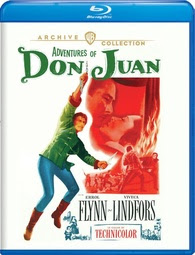
On Blu-ray: Errol Flynn in Adventures of Don Juan (1948)


Adventures of Don Juan (1948) marked Errol Flynn’s return to the swashbuckling genre that made his name after a nine-year absence. Though more seasoned and slightly humbled by life, Flynn is as dashing as he ever was in a story that amusingly mirrored his own active love life. The film looks and sounds magnificent on a new Warner Archive Blu-ray I recently viewed. 

Flynn’s Don Juan has been so busy with the ladies that he can’t remember the names of his conquests anymore. Escaping his latest scandal, he takes on employment as a fencing instructor for the Spanish monarchy. He has been accepted by Queen Margaret (Viveca Lindfors) thanks to the encouragement of a mutual friend. 

In his time at the royal court, Juan falls for the reserved queen. He also uncovers a Duke’s (Robert Douglas) devious plot to overthrow the monarchy and go to war with England. While he predictably wins the queen’s heart and conquers the duke, his response to these victories reflects a newfound wisdom in both character and actor. 

Overall this is a triumphant return to swashbuckling for Flynn. The production itself is grand, from the jaunty (if a tad repetitive) Max Steiner score to the impeccably detailed beauty of the sets and costumes. For lovers of the genre and star, this film delivers. 

I came away less satisfied with some of the casting; not because it wasn’t good, but rather because it paled next to the more brilliant pairings in Flynn’s past. Swedish actress Lindfors is an appealing queen, but her chemistry with Flynn is so flat that when they finally find themselves in a romantic clinch, it doesn’t make much sense. Likewise, Robert Douglas is a worthy villain as the duke, but his heavy-handed fencing style made me long for the fleet-footed elegance of Basil Rathbone. 

Special features on the disc are DVD carryovers including commentary by director Vincent Sherman and historian Rudy Behlmer, a Warner Night at the Movies 1948 short subjects gallery including a newsreel, the Joe McDoakes comedy short So You Want to Be on the Radio, the travel short Calgary Stampede, the cartoon Hare Splitter and a theatrical trailer. 


Many thanks to Warner Archive for providing a copy of the film for review.

Jul 6, 2022

On Blu-Ray: Judy Garland and Robert Walker in Vincente Minnelli's The Clock (1945)


While drama wasn’t Judy Garland’s core competency, she was nevertheless an accomplished dramatic actress. Her sincerity and the way she wore her heart on her sleeve gave her everything she needed to succeed in the genre. She’s well-matched with Robert Walker in the World War II-era The Clock (1945), her first non-singing lead, because he also had those qualities. I recently revisited the film on a gorgeous new Blu-ray from Warner Archive. 

Walker is Joe Allen, an Army corporal on a two-day pass in New York who wants to see the best sights the city has to offer. With his baby-faced earnestness and innocent enthusiasm, he looks like the sort of guy who would be gobbled up by Manhattan. You wait in suspense for someone to pick his pocket or otherwise take advantage of him. 

He is saved from such a fate by Alice Maybery (Garland), another innocent not long in the city herself. The soldier helps her to retrieve and fix a broken heel and soon convinces her to accompany him to the museum she has suggested. They hit it off immediately; their chemistry so strong that by the end of the 48 hours they know that they want to spend the rest of their lives together. 

The budding lovers get to know each other in a city that encourages their romance. A lonely man across the dining room pays for their meal in a restaurant. In another sequence, Alice and Joe take a ride from a milk delivery man who insists he wants their company in his truck. It ends up being more complicated than that and the way the pair help the man through adversity shows how they share a moral core and the ability to work together, both strong elements for a good marriage. 

Their experiences together in the city made me think of other New York-set films. The missed connections they overcome and their youthful loneliness evokes the equally touching silent-talkie hybrid Lonesome (1928). I also saw elements of bizarre nighttime chaos in the city that foreshadowed Martin Scorsese’s After Hours (1985) and that sparkle of instant chemistry and companionability was in the spirit of Richard Linklater’s Before Sunrise (1995). 

Director Vincente Minnelli, who would marry Garland in 1945, films his star with loving care. She glows with the beauty of a woman who is treasured and celebrated. As someone who wanted to be as gorgeous as the most desirable movie goddesses, this must have been a moving tribute for the star. 

The film strikes a good balance between the various perils that threaten to part the couple and long, uninterrupted stretches where Alice and Joe get to know each other. While their emotional bond is instant, the world around them is complicated and they overcome a lot within 48 hours of knowing each other. When that time is over and Joe must return to service, the memory of their struggle and persistence inspires a feeling of faith that he will return. 

Special features on the disc include the vintage Pete Smith specialty short Hollywood Scout, the cartoon The Screwy Truant, a radio show adaptation of The Clock starring Garland and John Hodiak, and a theatrical trailer. 


Many thanks to Warner Archive for providing a copy of the film for review.

Jun 1, 2022

On Blu-ray: James Coburn is a Doctor Detective in The Carey Treatment (1972)


I went into the new Warner Archive Blu-ray release of The Carey Treatment (1972) knowing nothing about the film except that it starred James Coburn, one of my favorite actors. The Blake Edwards-directed production, based on an early novel by Michael Crichton has much to offer, though it left me with mixed emotions. So much of it feels like unfulfilled potential. 

It was bracing to learn that an illegal abortion played a key role in this mystery drama just days after hearing of the leaked plans by the US Supreme Court to overturn Roe vs. Wade. The film isn’t about that, but rather how justice suffers in the corruption of systems. Still, it was a chilling reminder of how long this issue and the discord around it have been a part of our society. 

The abortion in question leads to the death of the daughter (played by daughter of Mel Tormé, Melissa Tormé-March) of a Boston hospital director Dr. J.D. Randall (Dan O’Herlihy). Blame quickly falls to Dr. David Tao (James Hong), a physician at the hospital who is known for performing the procedure at cost for women of limited means. 

There is no solid evidence that Tao is guilty though, a fact that is clear to his friend and a pathologist Dr. Peter Carey (James Coburn) who has recently arrived in town to take a cushy job at the hospital. While Tao sits in jail, Carey defies all orders to mind his business so that he may free his colleague. 

Hong is a clear-eyed, refreshing presence in the macho world of seventies cinema, it was a disappointment to realize he would only book-end the main action of the film. Still, it was nice to see the prolific actor in an early role. He’s a lightly cynical counterpoint to the determined Dr. Carey. 

In the titular role, James Coburn unleashes his reliable, easy charm, taking on a character who seems like a scoundrel on the surface, but who has empathy and sensitivity in opposition to many of the male roles of the era. He has the same morality as a superhero, but none of the corny, upstanding aura that comes with that. 

The often underused Jennifer O’Neill is Carey’s love interest. She’s a dietician with a deadbeat husband on an extended ski vacation and a young son to support. While she is only there to allow Carey’s inner monologue to translate into dialogue and exposition, it’s interesting the way the relationship unfolds. Instead of the familiar game of pressure and subtle aggression, Carey gently communicates his attraction. His simple, unsleazy flirtation is welcome and indicates his confidence in himself and the challenges he faces. 

There are a few stand-outs in the intriguing supporting cast. Elizabeth Allen is smoothly entitled as the wife of Dr. Randall and stepmother of his deceased daughter. Skye Aubrey also stands out as a troubled nurse who loses control of her life. The always reliably skeezy Michael Blodgett brings his low-lidded corruption to the role of a masseuse who looks like trouble, but somehow still  gets away with way too much. 

While the story and cast are solid and this was a generally entertaining film, it felt a bit sloppy and ill-formed. In reading about the production, I learned that due to studio interference, Edwards was not able to make the film as he desired. He would later take out his frustrations by alluding to the incident in S.O.B. (1981). It’s a shame, because all the talents involved were capable of much more, but Coburn’s charisma makes up for a lot and is reason enough to make the film a must-see for fans of the actor. 


Many thanks to Warner Archive for providing a copy of the film for review.

May 18, 2022

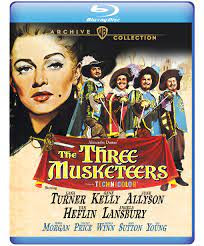
On Blu-ray: Gene Kelly and Lana Turner in The Three Musketeers (1948)


The Three Musketeers (1948) may not be one the most celebrated of MGM’s films, but it has all the best that the studio had to offer. It’s full of action, with just the right amount of humor, its stars are for the most part perfectly cast, the costumes are gorgeous, and the Technicolor lends it all an unreal beauty. I recently enjoyed all these things on a new Blu-ray release from Warner Archive which looks great and gives the film a refreshed look. 

It makes sense that Gene Kelly would thrive in an action film. His bruised dance partners (and Lana Turner in this film) had stories to tell about his occasional overabundance of energy. Here he had a good outlet for that boundless physicality. He is a good fit for D’Artagnan, because while there are emotional elements, the part calls mostly for derring-do. 

Van Heflin takes on the dramatic duties as Arthos and he works well with the lighter Kelly. Lana Turner is also striking as M’Lady; her role is written more to showcase her screen presence than dramatic ability, though she has her moments and lends a delightfully twisted edge to her villainous character. The camera focuses on her like a crushed out teenager and she is breathtakingly stunning in her color film debut. Vincent Price is also reliably evil, seeming to pioneer the now long-standing villain tradition of stroking a cat while plotting wicked deeds. 

I always feel guilty about my dislike of June Allyson. While I can see objectively that she is talented, there’s something about her that leaves me flat. I could understand the freshness of her persona as Constance being appealing here for those who are fans, but I found her to be a mismatch with Gene Kelly. 

The cast is filled out with Angela Lansbury, Frank Morgan, John Sutton, Gig Young, and Keenan Wynn all of them understanding the assignment. There’s a lot of talent to behold here. 

Overall this is engaging, well-paced moviemaking. Costume dramas aren’t a go-to genre for me, but so many things go right with this production that it has an appeal which elevates it beyond category. It’s the kind of film you imagine when you think of the studio classics. Aside from the great production values and performances, the story is more engrossing because it is one of the first Musketeers adaptations to adhere more closely to the source material. It’s a good time. 


Many thanks to Warner Archive for providing a copy of the film for review

May 11, 2022

Cinerama on Blu-ray: The Wonderful World of the Brothers Grimm (1962)


I recently had the fascinating and bizarre experience of watching the Cinerama film The Wonderful World of the Brothers Grimm (1962) on Blu-ray. The new two-disc release from Warner Archive is a colorful oddity, full of features, and with different options for viewing to make up for the impossibility of replicating the experience of watching this kind of format at home. 

Three lesser-known tales from the famed brothers are woven into a somewhat fictionalized mid-life biopic of the pair. Laurence Harvey and Karl Boehm play the Grimms, while Claire Bloom and Barbara Eden star as their love interests, wife and intended respectively. They’re all appealing enough in their roles, though these sequences can drag.

While Henry Levin directs the framing story, stop-motion genius George Pal directs the fairy stories. Pal did his best work with charming, fanciful creatures, and this was a great progression from his work in Tom Thumb (1958). He injected a sense of play into his creations that lightened even the most perilous scenes. 

The fairy tale sequences are, unsurprisingly, the most intriguing. My favorite was the first, The Dancing Princess featuring Yvette Mimieux and Russ Tamblyn. It’s a romantic story of a restless princess (Mimieux) who escapes to the forest at night to dance with the lively members of a caravan. Tamblyn is a woodsman the king (Jim Backus) enlists to find out why his daughter’s slippers are soiled and worn each morning. Mimieux is perfect as a young royal who wishes to burst out of the confines of her life and Tamblyn gets some, if not enough, opportunity to show off his acrobatic dancing skill. 

Though mostly played for comic effect, The Singing Bone has its share of eerie moments, which gives it a bit of edge. It stars the perfectly-matched Terry-Thomas and Buddy Hackett and features a fantastic stop-motion dragon that is one of Pal’s best screen creations. 

The least successful of the fairy stories is The Cobbler and the Elves, which features Pal’s Puppetoons. While well-crafted, the tiny puppets get lost in the wide expanse of the Cinerama frame. 

While it is impossible to replicate the Cinerama experience at home, seen on the biggest screen possible you get a sense of what was intended. The novelty of the format is a constant curiosity. It never quite leaves your mind as you watch, which works with a film that is meant to be light entertainment. To a degree it makes up for the many moments where the action dips. As a spectacle with some elevated moments, it works.

Special features on the 2-disc set include multiple trailers for the film, radio interviews with Yvette Mimieux and Russ Tamblyn, the documentary Rescuing a Fantasy Classic, the featurettes The Epic Art of the Brothers Grimm, The Wonderful Career of George Pal, and A Salute to William Forman, a slideshow of images from the film, an image of the location commemorative plaque in Rothenberg, Germany, and menu access to the songs in the film. 


Many thanks to Warner Archive for providing a copy of the set for review.

May 4, 2022

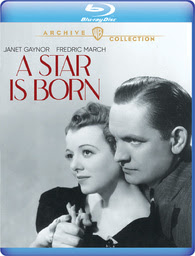
On Blu-ray: A Star is Born (1937) Restored from Nitrate


No matter how many times Hollywood remakes A Star is Born, my heart stays with the 1937 original. I’ve enjoyed seeing different takes on the story over the years, but the relationships and the characters at the center of this version have always felt the most authentic to me. I fell in love with the movie anew when I recently watched a new Blu-ray release from Warner Archive that is a gorgeous restoration from the original nitrate. 

The 1937 film is the only version to show the determined Esther Blodgett (Janet Gaynor) before her move to Hollywood. We get to see her humble beginnings. Her home is loving, but not satisfactory. You can see the life she could have had, one that would have spared her one kind of heartbreak, but given her another by breaking her spirit. Esther’s parents don’t understand her passion for acting, but her grandmother (May Robson) does, because she has successfully acted on her own passions. 

Esther knows that she has what it takes to be a star, nothing could stop her, but having that support gives her strength. When she stands in front of Grauman’s Chinese Theatre, admiring the footprints of the stars, far away from home, she seems less alone because you know she has that connection. 

The film plays an interesting balancing act between Esther’s (soon to be renamed Vicki) ambition and her love for Norman Maine (Frederic March). While he is the reason she succeeds in the business, she is willing to give up that success for him. It isn’t that her dream wasn’t worthy; she simply learned that love mattered more to her. 

Their relationship is one of the great screen love affairs because of their enduring friendliness with each other. It isn’t just romantic love, they like each other. While there are plenty of unhealthy aspects to their relationship, Vicki never finds him a burden, because they are truly soul mates. 

Director William Wellman takes a simple approach in filming his stars. He frequently places them directly in the center of the frame, keeping the focus on Vicki, observing her emotions with an empathetic gaze. It gives the film an intimate feeling. 

In addition to Robson, Andy Devine and Adolphe Menjou are a reassuring presence as supporters of Vicki who stand by her through the good and the ugly. Lionel Stander is a delight as her friendly, but image-driven publicity man. I’m always shocked to see him in the film because it astounds me how long his career was; what an incredible accomplishment to have gone on to act well into the 1990s! 

Special Features on the disc include Two Lux Radio Theater Broadcasts of A Star is Born, one with Gaynor, the other with Judy Garland, the carton A Star is Hatched, the shorts Mal Hallett & His Orchestra, Taking the Count, and Alibi Mark, and a theatrical trailer. 


Many thanks to Warner Archive for providing a copy of the film for review.

Apr 4, 2022

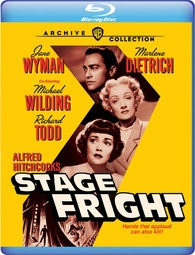
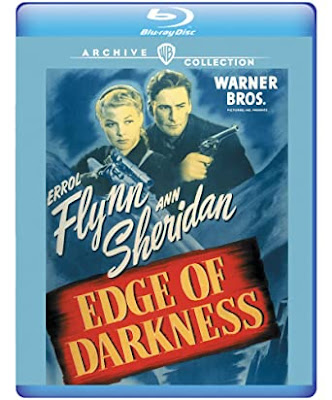
On Blu-ray: Alfred Hitchcock's Stage Fright (1950) and Lewis Milestone's Edge of Darkness (1943)


In an especially intense time where world events are concerned, it was a bit much to watch this pair of films full of tension and fear, but I enjoyed them for their good qualities, despite feeling thoroughly drained in the end. 

Stage Fright (1950) 

I always do a double take when I see Alfred Hitchcock’s customary cameo in Stage Fright. I think “oh yeah, this is a Hitchcock.” It’s an unusual film in the director’s filmography: less perverse, lighter on the thrills, and more focused on quirky characters. It isn’t a top Hitchcock for me, but I enjoyed revisiting the film on a new Blu-ray from Warner Archive. 

Stage Fright is set in the theater world. Richard Todd is Jonathan Cooper, an actor having an affair with singing stage star Charlotte Inwood (Marlene Dietrich). In the opening scene, she shows up to his flat in a blood-soaked dress and tells him she has killed her husband. He soon finds himself being hunted for the crime and turns to fellow thespian Eve Gill (Jane Wyman), who has a crush on him, for help. 

This is a tricky story, famous for upsetting audiences due to a notorious deception, but it somehow never catches fire. The main appeal is in the cast: Alastair Sim is drily amusing as Eve’s father and actresses including Sybil Thorndike, Kay Walsh, Joyce Grenfell, and Patricia Hitchcock give the proceedings a comic, ghoulish tone. While Todd didn’t affect me one way or the other, Jane Wyman is well-cast as a sharp, but naïve actress, and Marlene Dietrich adds a shot of glamour and sings several songs (she also looks amazing because Hitchcock let her dictate her own lighting, something he seems to have thought she did much better than acting). 

It’s an entertaining if minor entry in the Hitchcock oeuvre. Special features on the disc include a trailer and a short DVD feature-carryover making-of documentary that has major spoilers, so watch after seeing the film.

Edge of Darkness (1943)
 

I almost couldn’t bear to finish watching Edge of Darkness. In a time where yet another nation came under attack, it was difficult to watch a drama about the wreckage war has brought and continues to bring in our world. It is an excellent movie: beautifully filmed, impeccably cast, and effectively blunt, but it is brutal. 

While director Lewis Milestone’s breakout film All Quiet on the Western Front (1930) passionately echoed the pacifist message of its source novel, this World War II era follow-up is about fighting back. That said, both films firmly communicate that no one wins in war. The loss and suffering are too great for victory. 

It is the story of a Norwegian village under occupation and how the villagers fight back against the Nazis. The film is relentless in its approach; from the first scene, showing the town strewn with dead bodies to the final, chaotic battle scene. Before that shocking opening moment, there are a few moments of tranquility: a shot of glistening water, snow-covered mountain peaks, and low clouds drifting in the atmosphere. This is how it was before the troubles began. 

The cast is uniformly outstanding, with Errol Flynn a revelation in an atypically reserved performance and Walter Huston is solid as the stubborn but wise town doctor. This is a film for women to shine though; there’s a stunning array of complex, strong female characters. Ann Sheridan, Judith Anderson, Nancy Coleman, and Ruth Gordon are all at their best in devastating and fascinating performances. 

Despite its horrors, Edge of Darkness is a beautifully made film. Cinematographer Sidney Hickox (To Have and Have Not [1944], The Big Sleep [1946]) does his best work here, finding a balance between the fairy tale quality of the village setting and the horrific nastiness of battle. The Franz Waxman score is also magnificent, capturing the heart and spirit of the determined villagers. 

I can recommend this film, but it isn’t an easy watch. As with All Quiet on the Western Front it captures the best of us and the worst of us and that’s a lot to process. 

Special features on the disc include the short Gun to Gun, the cartoon To Duck…or Not to Duck, and a trailer. 

Many thanks to Warner Archive for providing copies of the films for review.

Mar 28, 2022

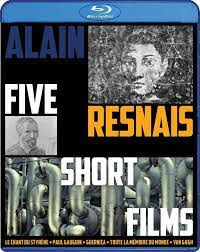
On Blu-ray: The Early Short Films of Alain Resnais, Director of Hiroshima Mon Amour (1958) and Last Year at Marienband (1961)

While best known for directing features like Hiroshima Mon Amour (1959) and Last Year at Marienbad (1961), Alain Resnais spent the first two decades of his career making short films. On a new Blu-ray, Icarus Films has released restorations of five of the most celebrated works from those years. 

The most compelling aspect of these films is that it is clear Resnais developed his style early in his career. In the mesmerizing Le chant du Styrène (The Song of Styrene, 1957), he manages to imbue a documentary short about plastics with all the mystery and tension of Marienbad. Not something I would expect to see in an industrial film. 

Toute la mémoire du monde (All the World’s Memory, 1956), a film about the National Library of France, casts a similar spell. With sweeping overhead views and long tracking shots, Resnais’ camera glides through this world of knowledge like a wistful specter. It’s a beautiful record of a grand building and its massive and rapidly growing collection. 

A trio of films dedicated to artists: Paul Gauguin (1949), Van Gogh (1948), and Guernica (about Picasso, 1949) uses effectively presented still images to tell the story of these artist’s most intense moments. Van Gogh won an Academy Award for short subject and an award at the Venice Film Festival, early recognition in a richly-rewarded career. 

While I liked the dramatic effect of the artist trio, I was most fascinated by the other two films, which profoundly demonstrate the artistic possibilities in documentary filmmaking. They’re a delightful prelude to the long career of a unique and visionary filmmaker. 

The disc comes with a booklet featuring an interview with Laurence Braunberger, daughter of Pierre Braunberger, who produced the shorts. In addition to providing a good historical background, Laurence shares a little about the process of restoration in which she played a key role. 


Many thanks to Icarus Films for providing a copy of the Blu-ray for review.

Mar 18, 2022

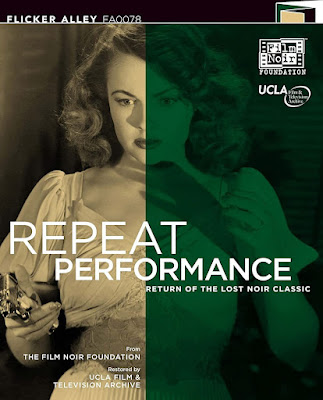
Noir on Blu-ray: Repeat Performance (1947) with Joan Leslie, A Gem Restored and Saved from Obscurity


Joan Leslie spent most of her career playing sweet-faced ingénues, which isn’t unfortunate in itself, but she did have more to offer as an actress. She proves this in Repeat Performance (1947), a unique fantasy/noir/melodrama in which the actress plays her most complex and mature character. 

Now available on a DVD/Blu-ray release from Flicker Alley, this production was almost lost to time, barely saved from a tattered print. Thanks to the fundraising of the Film Noir Foundation and restoration efforts by UCLA Film and Television Archive, Repeat Performance is not only available, but it looks amazing. 

Leslie stars as Sheila Page, a successful stage actress in a toxic marriage. She commits a murder in the opening scene and, blaming it on her bad choices over the past year she wishes she could live 1947 again and fix everything. Basically she wants to rewrite this act of her life, just like the plays in which she stars. She gets her wish, but quickly learns how little control she has over her alcoholic, resentful husband (Louis Hayward) and those around them. 

One of the best elements of the film is the supportive men in Sheila’s life. As her producer John Friday, Tom Conway is sympathetic, supportive, and believes in her no matter what wild stories she tells him about bending time. In his film debut as Sheila’s queer-coded poet friend William, Richard Basehart is also moving as a thoughtful and wise confidant whose gentle demeanor is at odds with the chaos around him (he’s also got the most luscious head of hair). It makes her co-dependent marriage with Hayward seem all the more absurd as she is putting so much into an unhealthy relationship when she is surrounded by far better examples of masculinity. 

The fantasy portion of the film is almost an afterthought. It plays with time as a means to launch the noir/melodrama. Once Sheila leaps into the past, little is said of it; there isn’t even much astonishment. 

Instead, the focus is on a cast of characters which proves to Sheila’s increasing frustration that trying to control people like characters in a play is a futile pursuit. Among them are Natalie Schafer, who purchases men for herself as a supposed patron of the arts (she doesn’t know what to make of the less-than-responsive William), Virginia Field as a playwright with her sights on Sheila’s husband, and Ilka Grüning as the refreshingly uncomplicated Mattie, who provides a palate cleanser by only wanting a glass of sparkling burgundy and a good time. 

It’s a gripping film, full of bad decisions, wild twists, and haunted by fate, which is why I think despite all the melodramatic elements, it earns the distinction of noir. 

The set is a typically thorough Flicker Alley release, with film commentary by noir expert Nora Fiore, a video profile of Joan Leslie hosted by Farran Smith Nehme (aka The Self-Styled Siren), a documentary about Eagle-Lion (the company that released the film) hosted by Alan K. Rode, and an introduction by Eddie Muller which makes clear how close this film was to disappearing forever. I also appreciated the comparison between film and source novel in Brian Light’s essay in the set’s accompanying booklet; there are some significant and telling differences between the two. 


Many thanks to Flicker Alley for providing a copy of the film for review.

Mar 9, 2022

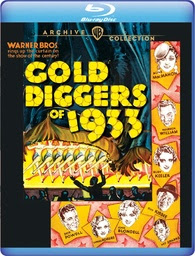
On Blu-ray: Golddiggers of 1933 (1933)


Golddiggers of 1933 is a triumph of cheerfulness and cynicism. Take that opening number, unfolding in the middle of the Depression. A chorus of glamorous showgirls garbed in golden coins, led by the upbeat and impeccable Ginger Rogers, sings about wealth and prosperity moments before their costumes are repossessed for non-payment. They will go home to steal milk from their neighbors, crammed together three to a room. It’s a number that dares to dazzle before quickly cutting to a shot of a producer played by Ned Sparks, chomping a cigar, unimpressed and sour-faced. It lathers on the cheer, but all the while it pokes at the worries of the time, a magnificent feat of escapism and realism combined. 

I was giddy to watch the film again on a new Warner Archive Blu-ray. It certainly looked a lot better than the version I taped off public television as a kid and played to shreds. There’s something special about the films you’ve watched so much that you know every line, glance, and musical cue. 

Golddiggers of 1933 possessed the best Warner Bros. had to offer: direction by Mervyn LeRoy, dance direction by Busby Berkeley, and a cast of the studio’s best players, including stars like Dick Powell, Joan Blondell, and Warren William and beloved character actors Guy Kibbee and Ned Sparks. 

The film’s airy approach to the most dismal topics is remarkable. Starving chorus girls Aline MacMahon, Ruby Keeler, and Blondell lament their hunger and the poverty that has forced them to pawn their clothes and valuables. They also warn each other about handsy show producers, but always with a sarcastic smile and snappy delivery. Men with power like William and Kibbee try to control their world, but the steel beneath these cheery women always comes through, and they find themselves footing the bills for expensive hats and nightclub dinners. 

Every other line tells you this is a pre-code movie and that racy vibe extends to the jaw-dropping Pettin’ in the Park number, which is horny even for the era. Pre-teen Billy Barty is dressed as a baby, rolling around on skates ogling scantily-clad show girls, they pretend to disrobe and shower behind a diaphanous curtain, and the final joke is a baby offering a can opener to a frustrated boyfriend who can’t handle his lady’s metal garb. Describing it all makes it even more astounding that it ever made it to the screen. 

In the end Golddiggers of 1933 triumphs because while it faces reality, it also asks you to believe in millionaire songwriters with open checkbooks, stage productions that hire all your friends, and Broadway shows with a multitude of close-ups that no one in an audience could ever see. It closes with a devastating number about the plight of World War I's Forgotten Man and it somehow leaves you exhilarated. It looks at reality and gives you pure fantasy. 

Among the many special features on the disc from previous DVD releases, there’s an especially interesting newsreel about the 42nd Street Special, a train which crossed the USA packed with film stars promoting Warner Bros. Bette Davis was on that train (and is in the reel); in an interview years later, she recalled that the train was not always well received, because wealthy film stars were the last thing a lot of struggling Americans wanted to see at the time.

Many thanks to Warner Archive for providing a copy of the film for review.

Feb 18, 2022

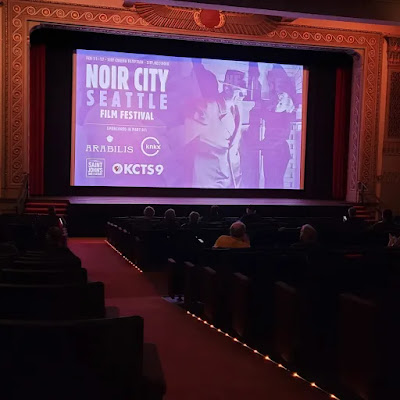
Fly-By-Night at Noir City: First Time In a Movie Theater Since 2020


I hadn’t thought a lot about when I would want to go back to the movie theater after the pandemic had kept me away for so long, but I knew I didn’t want to make a big deal of it. It seemed best to me to be as spontaneous and unbothered about it as possible. When the opportunity came up to attend Noir City, the film festival produced by the Film Noir Foundation, I decided it was a good time to come back, because the last film I attended in a theater was at Noir City 2020. 

My return film was the last of the festival: Fly-By-Night (1942). It was the perfect way to come back. I sat in my favorite seat in the back of the Egyptian Theater and felt safe because the screening was well-attended, but not crowded. I was able to keep my focus on the film. 

Authors and film noir experts Vince and Rosemarie Keenan introduced the film. They’re a charming duo and I appreciated their pointing out that this was an early writing credit for Sidney Sheldon. 

I’d never heard of Fly-By-Night and I purposely avoided reading anything about it before I watched it. I try to do this with Noir City screenings as much as possible, because I’ve always been able to trust their curating. It’s one of the rare places I can be truly surprised by a film. 

The Keenans noted that this zippy B-production was in essence a knock-off of Hithcock's The 39 Steps (1935). It does have a lot of the same elements: a man and woman being thrown together by chance, his attempts to clear his name, her growing interest in this mysterious man, and the devious elements and spy drama around them. 

I loved the screen pedigree of the stars: Nancy Kelly is most famous for playing the unfortunate mother in The Bad Seed (1956), Richard Carlson is best known as the scientist in Creature from the Black Lagoon (1954). And here they are together, long before those roles, in what can best be described as a comic spy adventure. 

It’s impressive what director Robert Siodmak was able to pull off with a low budget and brief running time. Some of the stunts are so absurd you’d expect to see them in an eighties action flick, but they somehow fit in this quasi-noir setting. Terrifying things happen in this movie: murder, kidnapping, even bodily disfigurement, but it’s all whipped together in a frothy, lighthearted way. It’s astounding that it works so well. 

Kelly and Carlson are a great team. It’s clear that Kelly's character is hungry for a little excitement and Carlson not only offers that, but an appreciation of her grit and independent spirit. It’s also refreshing to see a female role in which she is never helpless or on the sidelines, but rather an active participant in any fight, stunt, or challenge that arises. 

It’s clear that Fly-By-Night was never meant to be more than a light entertainment, but it’s so well done that it’s worth a rewatch. It was a satisfying way to re-enter the movie theater. Noir City always comes through. 


Many thanks to SIFF for providing tickets for the film.