Mar 9, 2022

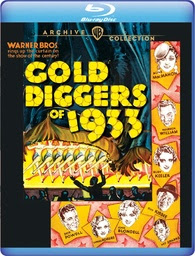
On Blu-ray: Golddiggers of 1933 (1933)


Golddiggers of 1933 is a triumph of cheerfulness and cynicism. Take that opening number, unfolding in the middle of the Depression. A chorus of glamorous showgirls garbed in golden coins, led by the upbeat and impeccable Ginger Rogers, sings about wealth and prosperity moments before their costumes are repossessed for non-payment. They will go home to steal milk from their neighbors, crammed together three to a room. It’s a number that dares to dazzle before quickly cutting to a shot of a producer played by Ned Sparks, chomping a cigar, unimpressed and sour-faced. It lathers on the cheer, but all the while it pokes at the worries of the time, a magnificent feat of escapism and realism combined. 

I was giddy to watch the film again on a new Warner Archive Blu-ray. It certainly looked a lot better than the version I taped off public television as a kid and played to shreds. There’s something special about the films you’ve watched so much that you know every line, glance, and musical cue. 

Golddiggers of 1933 possessed the best Warner Bros. had to offer: direction by Mervyn LeRoy, dance direction by Busby Berkeley, and a cast of the studio’s best players, including stars like Dick Powell, Joan Blondell, and Warren William and beloved character actors Guy Kibbee and Ned Sparks. 

The film’s airy approach to the most dismal topics is remarkable. Starving chorus girls Aline MacMahon, Ruby Keeler, and Blondell lament their hunger and the poverty that has forced them to pawn their clothes and valuables. They also warn each other about handsy show producers, but always with a sarcastic smile and snappy delivery. Men with power like William and Kibbee try to control their world, but the steel beneath these cheery women always comes through, and they find themselves footing the bills for expensive hats and nightclub dinners. 

Every other line tells you this is a pre-code movie and that racy vibe extends to the jaw-dropping Pettin’ in the Park number, which is horny even for the era. Pre-teen Billy Barty is dressed as a baby, rolling around on skates ogling scantily-clad show girls, they pretend to disrobe and shower behind a diaphanous curtain, and the final joke is a baby offering a can opener to a frustrated boyfriend who can’t handle his lady’s metal garb. Describing it all makes it even more astounding that it ever made it to the screen. 

In the end Golddiggers of 1933 triumphs because while it faces reality, it also asks you to believe in millionaire songwriters with open checkbooks, stage productions that hire all your friends, and Broadway shows with a multitude of close-ups that no one in an audience could ever see. It closes with a devastating number about the plight of World War I's Forgotten Man and it somehow leaves you exhilarated. It looks at reality and gives you pure fantasy. 

Among the many special features on the disc from previous DVD releases, there’s an especially interesting newsreel about the 42nd Street Special, a train which crossed the USA packed with film stars promoting Warner Bros. Bette Davis was on that train (and is in the reel); in an interview years later, she recalled that the train was not always well received, because wealthy film stars were the last thing a lot of struggling Americans wanted to see at the time.

Many thanks to Warner Archive for providing a copy of the film for review.

Mar 4, 2022

Podcasts for Classic Film Fans: February Round-up

As you can see from my selection, I had a varied month of podcast listening. Stay tuned next month for the return of my own podcast. I’ve got some fun guests lined up this season! All episode titles link to the shows:
Book vs Movie 
January 27, 2022 

Book vs Movie co-hosts The Margos have started adding other kinds of sources to their podcast, including short stories and in this case, a stage play so they can produce a weekly show. I’ve always been iffy on the movie, Humphrey Bogart was so poorly cast, and I was curious to hear how the play compared. It sounds like a completely different story, with a more worldly and educated Sabrina and stronger, more involved female characters. Now I’m dying to see a stage production of this story.

The Dana Gould Hour 
February 1, 2022 

There’s a lot going on in this entertaining episode: an interview with Jonah Ray (MST3K reboot) which references Tyrone Power, a brief history of publicity king William Castle, and an interesting bit about Alfred Hitchcock, the process of making Psycho (1960), and his search for great material.

The Movies That Made Me 
January 25, 2022 

I love Guillermo del Toro as much for his passion for movies as his filmmaking. It’s pure enjoyment to hear him talk about the films he loves and the many things that make movies great in this wide-ranging conversation. There have got to be many film fans who got into the classics because of his adoration of all kinds of cinema. 


Bloodhaus 
February 3, 2022 

I had high hopes for this art house horror show because co-host (and talented DVD/Blu-ray art designer) Drusilla Adeline is one of my favorite Twitter follows. So far it is promising. The conversation is smart, totally lacking in snobbishness, and infused with some playful elements that made it a little different than your typical movie talk show.

Mar 2, 2022

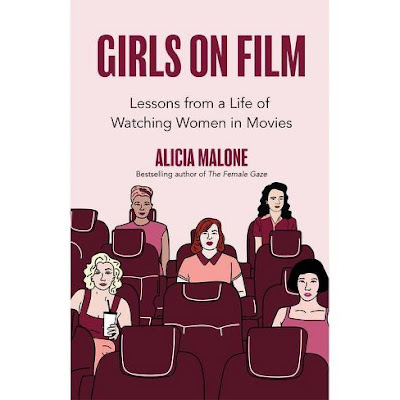
Book Review--Alicia Malone's Latest, Girls on Film: Lessons from a Life of Watching Women in the Movies


Girls on Film: Lessons from a Life of Watching Women in Movies 
Alicia Malone 
Mango Publishing, 2022 

I was delighted to see Alicia Malone had published her third book, Girls on Film: Lessons from a Life of Watching Women in Movies, because I’m a big fan of her writing. Her straightforward, clear style appears simple, but it takes a lot of skill to communicate in such a direct, thorough fashion. 

This time Malone has gotten personal, weaving a memoir into two things that have driven her life: the movies and how women are portrayed in them. I’ve read a few memoirs built around movie-watching, but never one that is so focused on a particular theme. 

Malone has always been inclusive in her writing about film and aware that it is important to draw attention to underseen players in cinema, be they women, people of color, trans and non-binary artists, or other less appreciated and spotlighted populations. Here she draws her own perspective into that issue, admitting that she, like many accepted a cinematic world centered on white, cis, straight men for several years of her film fandom. 

While unpacking her growing understanding of cinema and who and what makes it magical and meaningful Malone focuses on the movies that molded her and the issues most relevant to each title. Chapters are named for an interesting selection of films including Gentlemen Prefer Blondes (1953), Smooth Talk (1985), and Mad Love (the Drew Barrymore film, 1995). The movies are essentially a starting point for a fascinating series of reflections on personal, political, and societal issues, interwoven with a deep passion for cinema. 

Having met many introverted film fans over years of attending the TCM Classic Film Festival, I feel confident that a lot of readers will cringe in recognition, and conversely feel a glow of delight, in the experiences Malone has to share. Many of us have felt the awkwardness of learning about too many life experiences via the often unreliable lens of cinema, of spending a sunny day inside watching movies, and of trying to share that love with a world that generally just doesn’t get classic films. We’ve also found escape, enlightenment, and never ending fascination via our cinematic obsessions. She may be more ambitious, glamorous, and focused than the typical film fan, but Alicia Malone is definitely one of us. 

I’ve often felt frustrated that there are not more celebrated female film critics at the level of Siskel, Ebert, Maltin, and the like. In reading this book I realized that Alicia Malone has everything required to deserve that kind of status. I don’t feel there is yet the societal will to properly elevate and celebrate a woman of her intelligence and insight as a thoughtful authority on film (I hope I am wrong), but she has the goods.

Many thanks to Mango Publishing for providing a copy of the book for review.

Feb 18, 2022

Fly-By-Night at Noir City: First Time In a Movie Theater Since 2020


I hadn’t thought a lot about when I would want to go back to the movie theater after the pandemic had kept me away for so long, but I knew I didn’t want to make a big deal of it. It seemed best to me to be as spontaneous and unbothered about it as possible. When the opportunity came up to attend Noir City, the film festival produced by the Film Noir Foundation, I decided it was a good time to come back, because the last film I attended in a theater was at Noir City 2020. 

My return film was the last of the festival: Fly-By-Night (1942). It was the perfect way to come back. I sat in my favorite seat in the back of the Egyptian Theater and felt safe because the screening was well-attended, but not crowded. I was able to keep my focus on the film. 

Authors and film noir experts Vince and Rosemarie Keenan introduced the film. They’re a charming duo and I appreciated their pointing out that this was an early writing credit for Sidney Sheldon. 

I’d never heard of Fly-By-Night and I purposely avoided reading anything about it before I watched it. I try to do this with Noir City screenings as much as possible, because I’ve always been able to trust their curating. It’s one of the rare places I can be truly surprised by a film. 

The Keenans noted that this zippy B-production was in essence a knock-off of Hithcock's The 39 Steps (1935). It does have a lot of the same elements: a man and woman being thrown together by chance, his attempts to clear his name, her growing interest in this mysterious man, and the devious elements and spy drama around them. 

I loved the screen pedigree of the stars: Nancy Kelly is most famous for playing the unfortunate mother in The Bad Seed (1956), Richard Carlson is best known as the scientist in Creature from the Black Lagoon (1954). And here they are together, long before those roles, in what can best be described as a comic spy adventure. 

It’s impressive what director Robert Siodmak was able to pull off with a low budget and brief running time. Some of the stunts are so absurd you’d expect to see them in an eighties action flick, but they somehow fit in this quasi-noir setting. Terrifying things happen in this movie: murder, kidnapping, even bodily disfigurement, but it’s all whipped together in a frothy, lighthearted way. It’s astounding that it works so well. 

Kelly and Carlson are a great team. It’s clear that Kelly's character is hungry for a little excitement and Carlson not only offers that, but an appreciation of her grit and independent spirit. It’s also refreshing to see a female role in which she is never helpless or on the sidelines, but rather an active participant in any fight, stunt, or challenge that arises. 

It’s clear that Fly-By-Night was never meant to be more than a light entertainment, but it’s so well done that it’s worth a rewatch. It was a satisfying way to re-enter the movie theater. Noir City always comes through. 


Many thanks to SIFF for providing tickets for the film.

Feb 16, 2022

Film Biography Paperback Round-up: Michael Curtiz, Anna Held, Kay Kendall, and William Wellman

I spent a lot of my reading time over the past year catching up on paperback editions of biographies I had missed when they came out in hardback. All of these biographies came from my favorite publisher, University Press of Kentucky. I love the titles they put out dearly, but it is impossible to keep up with all the good things they publish, so I was grateful for a second chance to review these books:
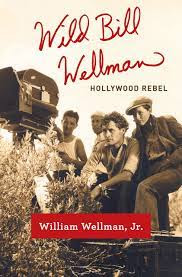
Wild Bill Wellman: Hollywood Rebel 
William Wellman, Jr. 

The best thing about this loving, but clear-eyed biography of director Wellman, by his namesake and one of his seven children, is that it is exciting from the first page. The nickname Wild Bill was apt. From his eventful childhood and peril-filled World War I pilot days to his long, magnificent career as one of the most successful film directors of the studio age, the filmmaker never had a dull moment in his life and despite caring little what people thought of him, he made more friends than enemies. He helmed an astonishing number of classic films, including Wings (1927), The Public Enemy (1931), A Star is Born (1937), and the Ox-Bow Incident (1942). Wellman also gave a break to a wide array of talent, with Ida Lupino, Rosalind Russell, Robert Mitchum, Timothy Carey, and Clint Eastwood among the young, hungry actors in which he saw star power. He appreciated his actors and crew and always stood up for him. While he had a bad habit of using his fists to deal with conflict and frustration, he’d often use that fury in their defense. His is an epic story, told here with a personal touch and the added insight of those who knew him.
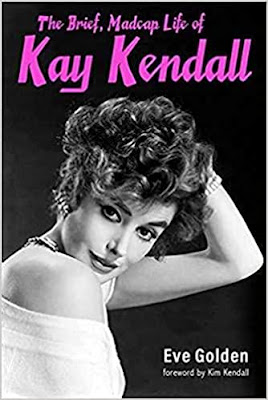
The Brief, Madcap Life of Kay Kendall 
Eve Golden 

Kay Kendall is probably best known to American audiences for her breathlessly chaotic performance in The Reluctant Debutante (1958) and a scene-stealing turn in Les Girls (1957). She would not live long after making those films, succumbing to leukemia in 1959. Her thirty-two years of life were astonishingly robust and packed with activity as if she knew her time was limited. Eve Golden taps into the endless energy and determination of this woman who needed very little time to make a lasting impression. It’s a bit like reading the script of a screwball comedy, with the notable exception of a tragic death scene. Still, the overall tone here is cheerful, reflecting a woman who would never dream of sitting still or indulging in self-pity. A great tribute to a uniquely charismatic talent.

Anna Held and the Birth of Ziegfeld’s Broadway 
Eve Golden 

The story of Polish-stage sensation Anna Held is remarkable because it both reveals a dramatically different time and the way fame has remained in many ways the same over the years. Golden’s exploration of the way rumor and promotional gimmicks both helped and hindered Held brings to mind many a scandal from the age of the Internet. Many film fans know Held from Luise Rainer’s Oscar-winning performance in The Great Ziegfeld (1936). As mesmerizing as Rainer was, Held was a much more substantial person, who balanced her knack for drawing adoring crowds with professional savvy, emotional wisdom, and a generosity of spirit, which she showed especially in the World War I years as she bravely traveled to frontlines to perform for French soldiers. She kept an eye on trends and did her best to advance with the times, as much as her core act was of a particular era. That intelligence is very much behind the success her common-law husband Florenz Ziegfeld had as an innovative stage pioneer. Golden gives the actress her proper due as a chief influencer in the way Ziegfeld dramatically changed stage entertainment.
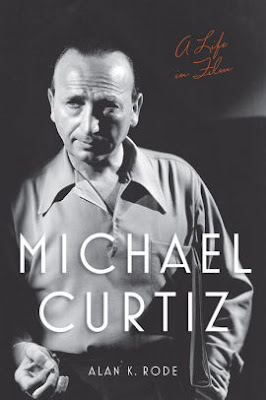
Michael Curtiz 
Alan K. Rode 

It seems that plenty of people respected Michael Curtiz’ technical skill as a filmmaker, but no one liked him. At best the insensitive and crude director had the respect of his co-workers. These personality defects are only part of the fascinating aspects of a life story that covers a phenomenal career spanning silent films in Europe to the early years of sixties Hollywood. Curtiz is most celebrated for Casablanca (1942), and for good reason, but I most enjoy the movies he made in the pre-code era and the tales of their production are just as lively as the end result. 


Many thanks to University Press of Kentucky for providing copies of the books for review.

Feb 9, 2022

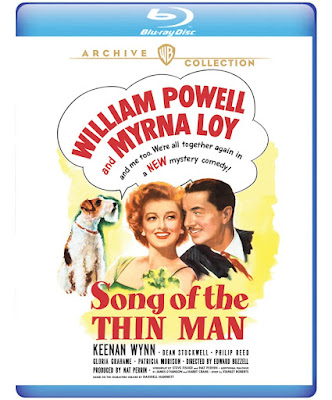
On Blu-ray: A Legendary Series Ends with Song of the Thin Man (1947)


Every entry in the Thin Man detective series starring William Powell and Myrna Loy is worth the watch, but once the plots ceased to be based on Dashiell Hammett’s stories, the concept lost momentum. The final film, Song of the Thin Man (1947) has many of the best qualities of the other entries: clever repartee between its leads, a lively supporting cast, and dynamic settings perfect for crime. Still, it is clear that by this point the concept had lost its thunder and it was time to wrap things up for the cinematic versions of Nick and Nora Charles. I recently watched the film on a new Blu-ray from Warner Archive and enjoyed it, but also felt it was a good place for the six-film series to end. 

A nightclub serves as the setting for the opening and closing scenes of the film and it’s an entertaining environment for intrigue. Gloria Grahame is the least believable chanteuse ever (not with that voice!), but she lip syncs with conviction while she stirs up passions in the band. The night of a charity event where she performs and Nick and Nora Charles are present, the bandleader is shot, setting the stage for mystery. 

The Charles’ son Nicky Jr. is now a tween, perfectly cast with the clever and eerily wise Dean Stockwell. While a long scene featuring Nora ordering Nick to spank her son for misbehaving hasn’t aged well, it’s amusing to watch the senior Charles seeing visions of good times with his son in his derriere as he becomes increasingly reluctant to dole out punishment. 

Song of the Thin Man relies on its strong cast, which also includes Keenan Wynn and Patricia Morison, for interest. The plot lacks cohesiveness and doesn’t build to a climax in an effective way. It is personality that brings everything together, as much as that happens. 

Overall it’s nice to have the full series now available on Blu-ray. Despite the varying quality of the films, they’re all reliable mood-lifters. 

Special features on the disc include the Passing Parade short A Really Important Person (starring Stockwell), the classic cartoon Slap Happy Lion, and a theatrical trailer. 


Many thanks to Warner Archive for providing a copy of the film for review.
Feb 2, 2022

Podcasts for Classic Film Fans: January Round-up

This month I got spent some time getting caught up with episodes that had been on my list for a while. It was a great reminder that a lot of the content on these shows is evergreen and worthy of picking up long after they first post and even occasionally being revisited. Episode titles link to the shows:

For Colored Nerds 
December 13, 2021 

Maya Cade of the Criterion Collection talks about her amazing side project: The Black Film Archive. It’s a free online directory of black films from 1915-1979 with notes about the films and information where to stream them (all titles can be streamed). It’s a gorgeous site with an overwhelming number of treasures and it was fun to learn more about how it came together.


Cinema Junkie 
December 17, 2021 

This is a great talk with noir expert Nora Fiores about the different kinds of women in film noir. They aren’t all femme fatales. It’s a good place for those new to noir to find viewing suggestions, but as one who has seen dozens of flicks in the genre, I found a few new-to-me titles to try.


The Video Essay Podcast 
June 19, 2021 

I’m more into making Reels on Instagram myself, but I loved learning about Film TikTok and how new film fans are using it to share their cinematic passions.


Unspooled 
December 26, 2018 

I enjoyed this episode from a few years back that was reposted upon the passing of Sidney Poitier. The first half focuses on the film, including the many ways Poitier’s performance was groundbreaking and of his own making. Activist DeRay Mckesson joins in the second half for a discussion about the way social issues can be folded into films which are both effective and entertaining. There's also a great interview with Lee Grant.