Jan 26, 2022

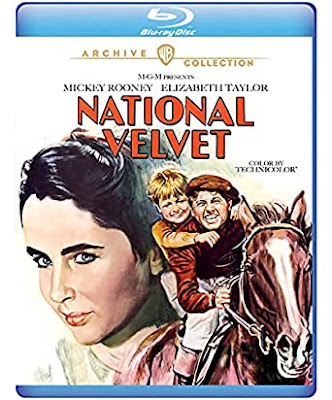
On Blu-ray: Young Elizabeth Taylor in National Velvet (1944) and Ivanhoe (1952)


 I’ve always felt like Elizabeth Taylor doesn’t get enough credit. Attention and admiration yes, but not enough praise for the variety she managed in her career. She was unique in the way she triumphed as a child actress and then moved through her teenage years gracefully before progressing to a higher level of acting and winning the greatest praise her industry had to offer. I thought about this as I watched a pair of new Warner Archive Blu-rays featuring the star in two early films: National Velvet (1944) and Ivanhoe (1952). 

Taylor showed the special passion for life that would fuel her many triumphs in her breakout performance as the horse-obsessed Velvet Brown in National Velvet. She glows with enthusiasm, entirely unable to show any teenage gawkiness despite the metal brace plate she keeps clicking in and out of her mouth. 

As a young rider who masquerades as a boy to compete in the Grand National Steeplechase, she emulates the strength of her mother (Anne Revere), a former champion swimmer who has a glint in her eye that implies a past of wild times behind her calm, maternal façade. As drifter and former jockey Mi, Mickey Rooney guides Velvet to the top, showing her the ropes when his initial impulse to take the race entry money and bolt is trumped by her infectious enthusiasm. This was the first time I tapped into Rooney’s talent. I never understood why he was so beloved until I saw him here, working in a lower-key register, revealing depths that could never come out in a musical. 

The rest of the cast is full of actors that always bring a smile; they’re like visual comfort food. There’s a young and pretty Angela Lansbury as Velvet’s sister and the always reliable Donald Crisp as the Brown patriarch. Freckle-faced, gap-toothed, sleepy-eyed Jackie “Butch” Jenkins is also there as Velvet’s brother, stealing scenes as he always does. 

I always find the middle part of the film drags, but the final race scene offers enough excitement to make up for the slack. Overall it’s a great tribute to the worth of taking risks simply because it makes you feel more alive. 

The sole special feature on the disc is a theatrical trailer.
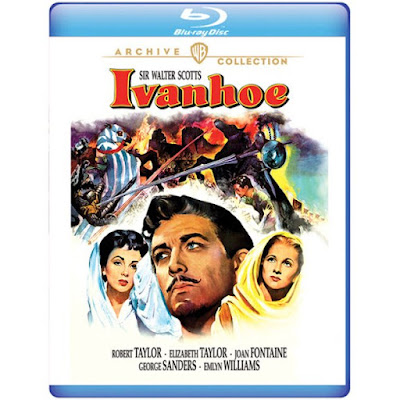
While I am not generally a fan of period pictures like Ivanhoe, I find this production objectively pleasing. It is filmed in bold, beautiful color, the stars, costumes, and sets are attractive, and there are some decent action scenes. 

In the title role Robert Taylor is pretty, but bland. In one of his standard villain roles George Sanders is more exciting, though it’s creepy to see him put the moves on a young Elizabeth Taylor as a Jew who loves and strives to protect Ivanhoe. Her romantic rival is Joan Fontaine, who has almost nothing to do but look lovely. 

Taylor’s role is not much more substantial. While this is a movie of men, she can’t help but have a little steel behind her words, though she has clearly been directed to look passive and pretty. After the fire of youth roles like National Velvet, it’s hard to see her playing such a bland character, but she already had A Place in the Sun (1951) under her belt and more engrossing films were yet to come. 

The jousting scenes in the final portion of the film are the most rousing part of the action, with more thrills than any of Ivanhoe’s romantic life. 

Special features on the disc include the Tom and Jerry cartoon The Two Mouseketeers and a theatrical trailer.


Many thanks to Warner Archive for providing a copy of the film for review.

Jan 19, 2022

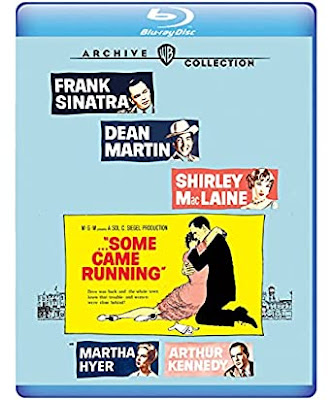
On Blu-Ray: Frank Sinatra, Shirley MacLaine and Dean Martin in Vincente Minnelli's Some Came Running (1958)


Going into Some Came Running (1958), I anticipated the steamy small town melodrama portrayed in the film’s trailer. It promised piano-pounding passion and a repressed mid-century society bursting from within. Perhaps it could have been about that, but in director Vincente Minnelli’s hands, James Jones’ (From Here to Eternity) massive tome evolved into something more sensitive and insightful, if still pulsating with the excitement promised in its marketing. This often somber, but engrossing Cinemascope production looks beautiful on a new Blu-ray release from Warner Archive.

Frank Sinatra stars as Dave Hirsh, a World War II veteran who reluctantly finds himself home in Parkman, Indiana. He is accompanied, in a fashion, by Ginnie Moorehead (Shirley MacLaine) a gaudy, but sweet dame he picked up while under the influence. Saddled with unwanted female attention, he also attempts, and fails to avoid his wealthy and self-absorbed brother Frank (Arthur Kennedy). Dave’s frustrations ebb when he meets Gwen French (Martha Hyer) a repressed school teacher who admires the works of his long abandoned writing career.

There is nothing in the town’s high society for Dave; he finds more comfort in the less restrained company of cardsharp Bama Dillert (Dean Martin). Ginnie seems a natural fit in that world, but Dave finds himself drawn to Gwen. In the midst of it all, just about everyone in the town misbehaves in one way or another, which makes it especially rich when Dave’s criticized for his drama simply because it’s published in the town paper instead of hidden behind doors.

While I find Sinatra’s restrained performance admirable, this film is stolen by MacLaine, with an assist by Martin. Minnelli seems to know this in the way he frames his scenes. Sinatra is always at his best with Martin, the shorthand of their friendship comes through on the screen and that is spotlighted with wisely balanced shots which feature both stars equally.

All of Minnelli’s sympathy goes to Ginnie though. His camera always seems to be checking in on her, framing her in windows, watching her adoringly as she peers through a classroom doorway. It is as if he wants to protect her, particularly from the toxic men in her life. She is the most vulnerable to the bad behavior that inevitably emerges when the males around her become adrift and insecure.

It’s heartrending to watch Ginnie beg for Dave’s love, she doesn’t deserve his snobbery and it’s horrifying to realize he’s actually treating her better than the other men she’s known. With her cheeks blasted with streaks of hot pink blush and a bedraggled purse shaped like a stuffed animal hanging from her arm, she seems like a child trying to play at being an adult, but beneath that façade is the core of the movie’s wisdom. Sinatra seemed to know that, and he felt that his costar deserved her flowers; he even had a key scene of the film altered to increase the emotional power of her role.

The film looks great, thanks to Minnelli’s experience in helming colorful, big budget musicals. He uses those skills in an artful way here, with careful compositions that use color, light, and various structures for maximum emotional impact. You see what particularly made him a great filmmaker when he is separated from the genre brought him fame.

Special features on the disc include a trailer and the featurette The Story of Some Came Running, which offers interesting insight into the film and its times.

Many thanks to Warner Archive for providing a copy of the film for review.
Jan 12, 2022

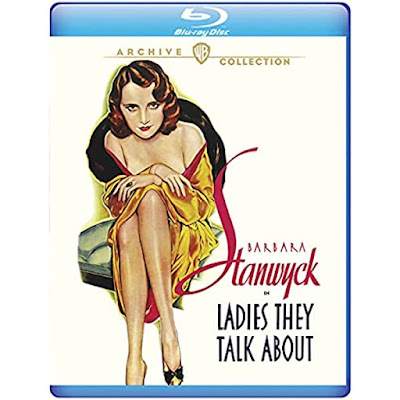
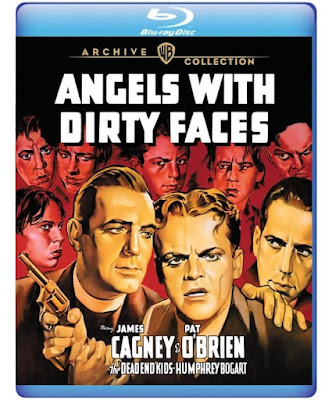
Crime on Blu-ray: Ladies They Talk About (1933) and Angels With Dirty Faces (1938)


As I watched the new Warner Archive Blu-ray releases of the crime flicks Ladies They Talk About (1933) and Angels with Dirty Faces (1938), I was struck by how differently the stories unfolded. Aside from the gender differences in the leads, their tone varied, from pre-code naughtiness, to post-code morality. I think both are classics in their way though. 

Ladies They Talk About is the purest distillation of the pre-code era. Barbara Stanwyck stars as a moll who ends up in a prison with unusual privileges. Women in lingerie live it up in cells that look like dorm rooms and they delight in their bad behavior. You wouldn’t see any of this enjoyment in the crime films that came with code enforcement. 

Stanwyck is perfect for her role as a slightly marshmallow-hearted dame gone wrong. While you never really believe that the crusading preacher (Preston Foster) who wants to save her could ever satisfy her, she doesn’t seem to have many other options. While she’s in prison for helping her gangster boyfriend pull off a bank robbery, she has plenty of time for racy literature, listening to her pal croon adorable songs (the always delightful Lillian Roth), and enjoying the salty repartee of a seasoned madam who lays claim on the rocking chair in the common room. 

It’s snappily-paced fun that’s clearly a precursor to the women-in-prison films to come, from the grimmer, but equally lively Caged (1950) to exploitation flicks like Caged Heat (1974). 

Special features on the disc include the cartoon I Like Mountain Music and a theatrical trailer.

Every time I watch Angels With Dirty Faces, I wonder what it would have been like if it had been made in the pre-code era. There are moments when it could use a little more edge or a bit of spice, but there’s also a craft to it that came with the maturation of cinema. 

The story blazes into action with that special brand of Warner Bros. efficiency, introducing tow childhood friends who take different paths with sharp, short scenes and a snappy montage sequence. When we finally settle in with the grown up Rocky (James Cagney), who is a lifelong gangster, and his friend Father Connolly (Pat O’Brien) who is working to help the boys in the neighborhood avoid the same fate, you know the important details; the characters have come alive. 

In typical Warner Bros style, the supporting players are as dynamic as the leads. While the Dead End Kids have always struck me as a bit corny, they are always lively and fascinating. Ann Sheridan and Humphrey Bogart also make a lot out of less showier parts. 

Cagney and O’Brien are great in their roles because they subvert the typical expectations of the parts they play. While Rocky is a morally loose tough, his eyes mist when he hears a young boy sing a soaring solo in a church choir and he is gentle and encouraging with love interest Sheridan, instead of crude and possessive. O’Brien has an appropriately street-smart edge as a priest who rather than taking a scolding or moralizing tone, faces the challenges of the kids he wishes to save realistically, meeting them where they live. 

The film has become a classic because of the emotional power of its shock ending, but that finale wouldn’t have half the impact without the strong character development and artful filmmaking preceding it. 

There are several special features, all of them carry-overs from the DVD release, it features the Leonard Maltin-hosted Night at the Movies 1938, which includes a newsreel, the musical short Out Where the Stars Begin, a Porky and Daffy Cartoon, and theatrical trailers, there’s also a featurette about the film, commentary from film historian Dana Polan and a radio production with the film’s stars.


Many thanks to Warner Archive for providing a copy of the film for review.
Jan 5, 2022

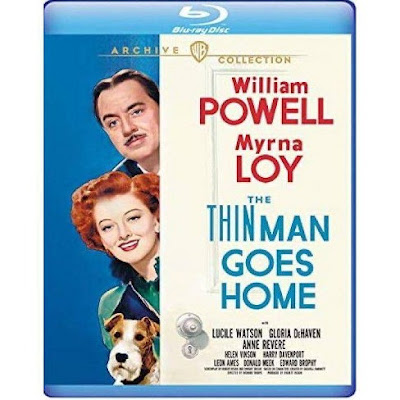
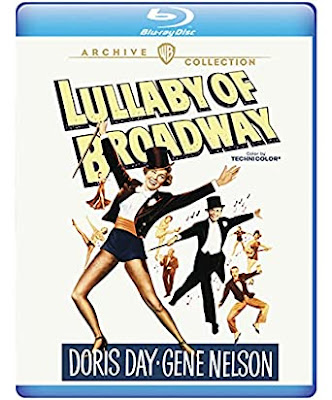
Comfort Watches on Blu-ray: Lullaby of Broadway (1951) and The Thin Man Goes Home (1944)


I recently watched a pair of flicks on Warner Archive Blu-ray that hit the spot as far as being just right as comfort watches. Lullaby of Broadway (1951) and The Thin Man Goes Home (1944) aren’t the best vehicles for their stars, but they’re pleasant, well-crafted films. 

Lullaby of Broadway is an odd grab-bag of a film. Its soundtrack ranges from the mediocre to the magnificent, with tunes from George Gershwin, Cole Porter, and the team of Harry Warren and Al Dubin at the top of the heap. The same holds true for the cast, with Doris Day doing her usual impeccable job and Warner Bros. favorites like S.Z. “Cuddles” Sakall and Gladys George achieving typically fine character work, but Gene Nelson flopping as a bland, if light-footed partner to Day.

The musical about a performer (Day) who learns of her mother’s (George) fall from Broadway star to alcoholism and finds love and stardom of her own along the way will please fans of its star. While it isn’t among her best productions, she is always at her best as a performer. While Day has no chemistry with Nelson, they have their moments on the dance floor. An energetic rehearsal room number shows the two at their playful best; it tops their performance together on the stage later in the film. 

An unusual number featuring Constance De Matiazzi as a “mechanical doll” is a bizarre delight and basically nails the random, but essentially enjoyable vibe of the film. 

Special features on the disc include a trailer for the film and a menu that links directly to the songs.

The Thin Man Goes Home
is the fifth entry in the popular series starring Myrna Loy and William Powell. It marks a transition for the films, being the first not directed by W.S. Van Dyke, as the filmmaker had passed on the year before. 

While it is populated by the usual fascinating cast of characters, including Anne Revere, Lucile Watson, and Gloria DeHaven in an amusing comic turn, it doesn’t have quite the energy of previous entries in the series. This is primarily because there’s never a true feeling of peril in the story. Everyone just seems to be on vacation. There isn’t a classic moment or key scene of hilarity as with the other films. 

There isn’t a bad Thin Man film though. The characters, and the stars, are always appealing. While it is only slightly satisfactory as a stand-alone film, it is decent as a part of the whole series. 

Special features on the disc include the Robert Benchley comedy short Why Daddy?, a theatrical trailer and a cartoon featuring the hideous Screwball Squirrel.

Many thanks to Warner Archive for providing a copy of the film for review.
Dec 31, 2021

Podcasts for Classic Film Fans: December Round-up

This month, after being much busier with my own podcast, I finally got caught up on some episodes that I’d been saving on my “to-listen” list for a while. All episode titles link to the show: 

Gilbert Gottfried’s Amazing Colossal Podcast
May 11, 2015 

Gilbert Gottrfried recently reposted this amusing and enlightening conversation with Michael Nesmith in celebration of the Monkee’s farewell performance, which took place in Los Angeles in November. Now it stands as a wonderful tribute to a man who could have been a dutiful puppet for a television rock band, but who offered so much more as a musician, songwriter, music video innovator, and generally witty man. He also shares the story of how his mom invented Liquid Paper, which is also impressive.
Morbid: A True Crime Podcast 
November 24, 2021 

Though I’ve read multiple books about the production history of Wizard of Oz (1939), there were still several new-to-me facts about the turbulent production of this musical classic here. I loved how the hosts heavily sourced interviews with the film’s stars to tell the story; it gave the narrative a personal and authentic feeling.

The Brattle Film Podcast
 
October 18, 2021 

There have been some great interviews this year with Kier-La Janisse, director of the essential folk horror documentary Woodlands Dark and Days Bewitched (2021), but this one is especially interesting because there are so many great film recommendations.


You’re Dead to Me
 
October 14, 2021 

I was struck by the warmth of this conversation about the life of Paul Robeson. He gets his props as a towering artist and a remarkable person. At the same time, his wife Eslanda also receives praise for her endurance as the spouse and manager of a busy and often unfaithful man (eventually they would address that issue by having an open marriage). It’s a well-balanced portrait.

Dec 29, 2021

On Blu-ray: 1933 Double Feature Mary Stevens, M.D. and Dinner at Eight

I was fascinated by the differences between a pair of films from 1933 I watched recently on new Blu-rays from Warner Archive. One is the efficient Warner Bros. melodrama Mary Stevens, M.D., starring Kay Francis and a cast full of the snappy, sharp-witted players who brought the studio success in the early thirties. The other, Dinner at Eight, is a lavish production filled with the biggest names at MGM Studios, though the young Jean Harlow stole the whole movie from her more experienced costars. 

Mary Stevens, M.D. features one of Francis’ best performances. She’s a young doctor who sets up shop with her former classmate and close friend Don (an adequate Lyle Talbot). He quickly gets tired of fighting to keep their pediatric practice afloat and marries politician’s daughter Lois (Thelma Todd, underused, but always welcome) so that he can secure the wealth and position he wants to enjoy without working to attain it. Predictably, that doesn’t go well for him. 

At first, it seems that the film is going to be all about Mary trying to find patients who aren’t horrified by the prospect of a lady doctor. It quickly dips into melodrama though, with illicit love, babies born out of wedlock, and deadly disease all complicating her life. It could be silly, but Francis is so sincere and as her nurse sidekick, Glenda Farrell keeps things zipping along when they could get maudlin. The film is particularly pre-code in the way the characters view Mary’s troubles with sympathy instead of scolding her for her sins, though it could be argued she is punished for her indiscretions.

My perspective of Dinner at Eight has changed dramatically over the years. Jean Harlow has been the one constant. As the fabulous-tacky nouveau riche Kitty Packard, she overshadows her illustrious cast mates, among them Billie Burke, Lionel Barrymore, John Barrymore, and the beloved Marie Dressler. Her crackling comic performance makes me constantly forget that this film is as much a drama as a comedy. 

Over the years, I’ve overcome the disorientation that comes from the intense busyness the film evokes and honed in on other performances, like the charming resignation of Dressler as a former stage star with financial troubles and the mix of bravado and impotence in John Barrymore’s fading matinee idol (he has a moment of brave vulnerability where he actually whimpers like a child). Burke is also a shallow, oblivious delight, devastated by the increasing disaster her dinner party is becoming while life and death struggles unfold around the bubble of self-involvement in which she exists. Her transition to a more aware, mature perspective is remarkably believable; she keeps the high pitch of her social climbing persona, while just beneath the surface a new decency emerges. MGM stars Lionel Barrymore, Wallace Beery, Edmund Lowe, Madge Evans, and Karen Morley are also on-board with their best performances.

Reportedly Harlow and Dressler became close on set and had discussed starring together in a comedy. What a shame the older comedian died in 1934 and that never came to pass.

Many thanks to Warner Archive for providing a copy of the film for review.
Dec 27, 2021

On Blu-ray: Henry Winkler, Michael Keaton, and Shelley Long in Ron Howard's Night Shift (1982)


As lightweight as it can be, Night Shift (1982) is a notable film for many reasons: it was Ron Howard’s directorial debut and Michael Keaton’s break-out role, in addition to being an opportunity for Henry Winkler and Shelley Long to show other facets of their talent in the era where they were playing their most famous television roles (Happy Days and Cheers respectively). I watched the film on a new Warner Archive Blu-ray and found that while it hasn’t dated well in a lot of ways, it’s a decent showcase for its stars. 

Winkler is Chuck Lumley a burned-out Wall Street drop-out who finds life easier to take working the night shift at the city morgue. He’s a timid and terrified man, refusing to ever stand up for himself or recognize that he’s not really in love with his neurotic, food-obsessed fiancée. When the irritating but oddly alluring Bill Blazejowski (Michael Keaton) starts working with him, he shakes up his life in an often uncomfortable, but ultimately necessary way. Part of the shake-up involves Chuck's neighbor Belinda Keaton (Shelley Long) a sex worker in peril because her pimp has been tossed through a basketball hoop, from several stories up (as is depicted with an oddly humorous tone in the opening scene). 

Bill suggests that he and Chuck provide protection, fair wages, and a better life for the women Belinda’s pimp has left behind. It’s a terrible idea, but the immediate benefits conceal that from all. The view of relationships, women, and sex work here is solidly 1982. 

The score is equally lacking in progressive artistry, at least from the start. Burt Bacharach was a genius, but the music in the first half of the film feels like several cheesy variations on Raindrops Keep Fallin’ on My Head. When the focus shifts to romance though, an early instrumental version of That’s What Friends are For (a few years before it would be a monster fundraiser for AIDS research via Dionne Warwick and Friends), and which Rod Stewart sings in the closing credits, beautifully enhances the gentler aspects of the film. 

While Winkler comes off as a little bland, he’s also sweetly relatable in the way he does his best, but gets overwhelmed by the world around him. Keaton plays a character who should be unbearable, but he’s got this alluring energy which sells you on him no matter how grating he can be. Every charismatic quirk that would make him a star explodes here, announcing a star with an inevitable rise. Long is equally charming and I wondered, as I often have, why she didn’t get more of a chance to demonstrate her appeal in this way in the movies (while she had a couple of flops that sank her film career in the eighties, the famously easygoing Winkler’s later comments about finding her difficult to work with might also offer a clue). 

Overall it’s a charming, light comedy romance, made a little more interesting with the inclusion of great character parts, including Howard’s brother Clint Howard and the always magnetic Joe Spinell as a sleazy club owner. It’s worth a watch.

Many thanks to Warner Archive for providing a copy of the film for review.